Table of Contents
Introduction
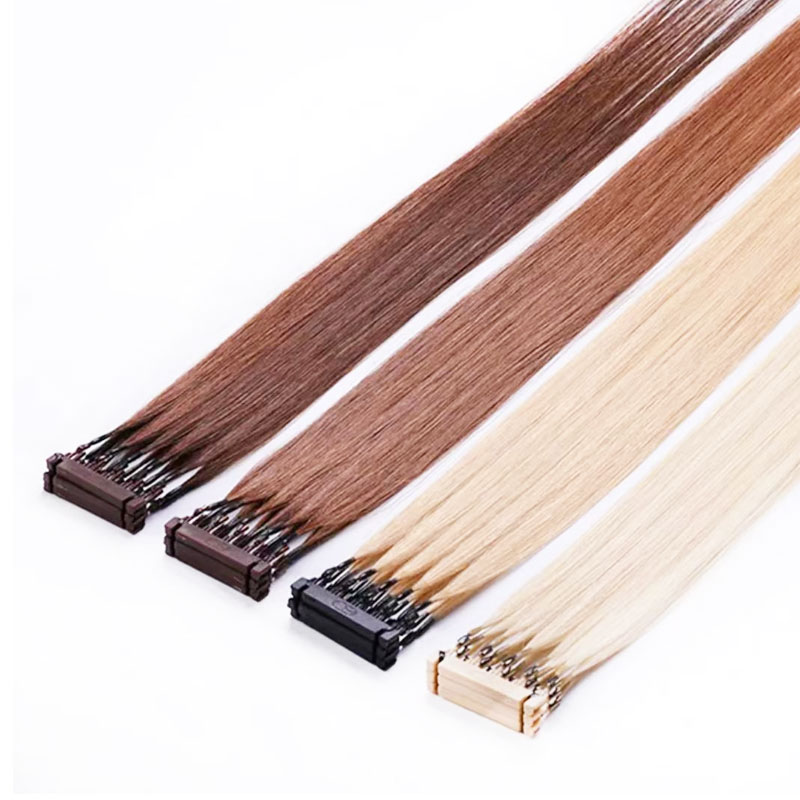
Hair extension systems continue to evolve as stylists look for ways to improve placement consistency, reduce repetitive application steps, and create results that move naturally with the wearer’s own hair. Among these systems, 6D human hair extensions have attracted attention for their tool-assisted, multi-strand application concept.
The name can sound highly technical, but “6D” is not a universal scientific grade for human hair. It usually refers to a family of extension systems that use prepared strands, specialized connectors, and a compatible application tool to position several extensions during one working sequence.
This distinction is important. The label does not automatically tell you:
- The quality of the human hair
- The exact number of strands handled by the tool
- The material used in the connector
- The weight of each extension section
- Whether the system suits fine, thick, straight, or textured hair
- How the attachments should be removed or reused
Different 6D systems may use different strand arrangements, attachment structures, and tools. A professional evaluation should therefore focus on compatibility rather than relying on the product name alone.
For a reliable result, five elements must work together:
- Human hair fiber quality
- Connector design
- Tool compatibility
- Professional sectioning
- Appropriate maintenance
When these elements are properly matched, 6D human hair extensions can provide efficient strand placement, controlled density, and natural movement. When they are mismatched, even a fast application system may create visible connectors, uneven tension, slipping, or difficult maintenance.
What Are 6D Human Hair Extensions?
6D human hair extensions are individual or grouped extension strands prepared for installation with a compatible application system. The strands are usually organized so a stylist can place several attachments in a controlled pattern rather than handling every piece entirely separately.
The wider category of hair extensions includes wefts, bonded strands, rings, tapes, clips, wigs, and other integration methods. The 6D method belongs to the tool-assisted strand or small-group category.
Understanding the Meaning of 6D
The term “6D” is commonly associated with systems designed to manage several prepared extension strands during one tool action. Some systems are built around six strands, while others may use different cartridge layouts or connector arrangements.
For that reason, 6D should be treated as a commercial system category rather than a fixed engineering standard.
Before selecting a product, a stylist should confirm:
- How many strands the tool actually positions
- Whether the strands are preloaded
- Which connector design is required
- Whether the tool and hair are from compatible systems
- How the connectors are secured
- Which removal tool is needed
- Whether the extension hair can be reinstalled
This prevents assumptions based only on the name.
The Multi-Strand Application Concept
Traditional individual-strand methods often require the stylist to prepare and attach one extension at a time. A 6D system organizes several strands into a structured application sequence.
The potential advantage is not simply speed. The system can also help produce more consistent spacing when the tool, cartridges, strands, and natural hair sections are prepared correctly.
However, applying several strands together does not reduce the need for professional judgment. The stylist must still decide:
- Where the strands should be placed
- How much natural hair should support them
- How close they should sit to the scalp
- Whether the attachment weight is appropriate
- How the color and texture should be distributed
The tool controls part of the mechanical process. It does not design the hairstyle.
Why 6D Is a System Category Rather Than a Hair Grade
Hair grade and installation system are separate concepts.
The 6D label describes how the extensions are organized or applied. It does not confirm whether the hair is Remy, cuticle-aligned, double-drawn, virgin, lightly processed, or synthetic.
Two products described as 6D human hair extensions may use very different hair fibers. One may remain smooth after repeated washing, while another may depend heavily on temporary surface treatment.
A professional buyer should evaluate the hair and the attachment system separately.
How the 6D Hair Extension System Works
Although system designs vary, most 6D methods involve prepared extension strands, a loading or application tool, small connectors, and carefully sectioned natural hair.
Pre-Sectioned Extension Strands
The extension hair is divided into controlled sections before installation. Each section should contain a consistent amount of hair so the final weight distribution remains predictable.
Uniform strand preparation matters because irregular sections can create several problems:
- Uneven density
- Different connector pressure
- Inconsistent movement
- Visible gaps
- Excess weight in isolated areas
The extension strands should also remain separated during handling. Tangled or crossed strands can interfere with tool alignment.
The Application Tool or Cartridge
A compatible tool holds or guides several prepared strands during the attachment process. Some systems use reusable tools, while others rely on loaded cartridges or replaceable components.
The tool should:
- Align the strands consistently
- Keep the connectors separated
- Allow clear positioning near the scalp
- Release the extensions without pulling
- Support controlled attachment pressure
A tool should never be treated as universally compatible with every product carrying a 6D label.
Connector Positioning
The connector joins the extension hair to a selected natural hair section. Its shape and material vary by system.
Regardless of design, a connector should remain:
- Small enough to conceal
- Strong enough to hold the intended strand
- Smooth enough to reduce snagging
- Flexible enough for normal movement
- Accessible for maintenance and removal
A small connector is not automatically gentle. If it carries too much hair or is attached to an undersized natural section, the load may become concentrated.
Natural Hair Sectioning
Sectioning is one of the most important stages of installation.
Each natural section must be large enough to support the extension but small enough to fit the intended connector. The sections should also follow the natural direction of hair growth.
Poor sectioning may cause:
- Slipping
- Twisting
- Uneven tension
- Visible connectors
- Restricted movement
- Root tangling
Using a multi-strand tool does not make sectioning less important. It makes accurate preparation even more important because several attachments may be positioned during the same sequence.
Final Attachment Check
After each application sequence, the stylist should inspect every connector individually.
The check should confirm that:
- Natural hair is distributed evenly
- No neighboring strands are trapped
- The connectors are fully secured
- The attachments sit at a consistent distance
- The hair moves without pulling
- The connectors remain separated
A grouped application should never be accepted as one completed block without checking the individual attachment points.
What Makes 6D Human Hair Extensions Different?
The main difference lies in how the extension strands are prepared, aligned, and applied.
Applying Multiple Prepared Strands in One Sequence
A 6D system is designed to reduce repeated strand-by-strand setup. Several extensions can be positioned through one organized tool action when the system is prepared correctly.
This may make the workflow more efficient, especially during larger installations. However, shorter application time should be treated as a process advantage rather than a quality guarantee.
Fast installation is useful only when sectioning, tension, color distribution, and connector security remain controlled.
Consistent Connector Spacing
A well-designed application tool can help keep connectors in an organized pattern. Consistent spacing may improve:
- Weight distribution
- Root access
- Brushing
- Concealment
- Maintenance
- Natural movement
Spacing still depends on how the stylist positions the tool. A perfectly designed cartridge cannot correct an unsuitable row location.
Controlled Density Distribution
6D human hair extensions can be placed in selected zones rather than added uniformly across the entire head.
A stylist may use stronger density through the back and lighter placement around the sides. This supports a more natural distribution because natural hair density is rarely identical in every area.
Reduced Repetitive Hand Movements
Preparing several strands in one system can reduce the number of repeated loading and positioning actions required during an installation.
This may improve workflow consistency for trained professionals. It can also reduce the chance that strand size changes gradually as the stylist becomes tired.
The benefit depends on correct tool use. An unfamiliar system may initially require more concentration than a traditional method.
System-Specific Installation Requirements
Unlike more standardized attachment categories, 6D systems can vary significantly.
A stylist trained on one system should not assume that another system uses the same:
- Connector
- Tool pressure
- Strand count
- Section width
- Removal method
- Reinstallation process
Product-specific training and testing remain essential.
6D Human Hair Extensions Compared With Other Methods
| Extension method | Application format | Placement control | Attachment profile | Movement | Main consideration |
|---|---|---|---|---|---|
| 6D human hair extensions | Several prepared strands positioned through a compatible tool | High when sections are planned correctly | Small grouped connectors | Individual or small-group movement | Tool, cartridge and hair must be compatible |
| Micro ring extensions | Individual strands secured with separate rings | Very high | Small rounded connectors | Independent strand movement | Repetitive sectioning must remain consistent |
| Tape-in extensions | Wider adhesive panels | Moderate | Flat panels | Section-based movement | Panel alignment and clean attachment surfaces |
| Weft extensions | Continuous tracks installed in rows | Moderate | Linear track | Row-based movement | Track weight and natural hair coverage |
| Bonded strand extensions | Individual pre-bonded tips | Very high | Small bonds | Independent movement | Bond formation, heat control and removal |
The best method depends on the wearer’s hair condition, desired density, maintenance habits, preferred hairstyles, and the stylist’s training.
6D human hair extensions are not automatically superior to every other method. Their strongest advantage is the structured multi-strand workflow, but that workflow is useful only when the natural hair can support the selected attachments.
The 6D Compatibility Framework
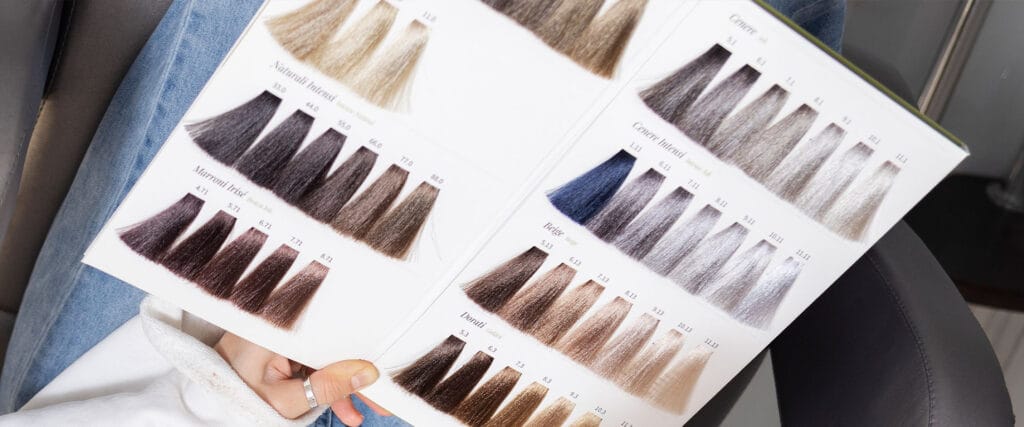
A practical way to evaluate a 6D system is to use four compatibility checks.
Hair Compatibility
The extension hair should match the natural hair in more than color.
Evaluate:
- Strand diameter
- Surface texture
- Wave or curl pattern
- Density
- Movement
- Response to moisture
- Response to heat styling
A mismatch can make the extensions look separate even when the connectors are hidden.
Hardware Compatibility
The tool, connectors, cartridges, and prepared strands should be designed to work together.
Using an incompatible component may create:
- Incomplete closure
- Uneven pressure
- Misaligned strands
- Damaged connectors
- Difficult removal
- Unreliable attachment security
Hardware compatibility should be confirmed before a salon commits to a full installation.
Technique Compatibility
The stylist should understand the specific system rather than relying only on general extension experience.
Technique compatibility includes:
- Tool loading
- Section size
- Application angle
- Connector closure
- Tension testing
- Removal
- Reinstallation
A technician may be highly experienced with wefts or tapes but still require training for a 6D tool.
Lifestyle Compatibility
The wearer’s routine affects product selection.
Consider:
- Washing frequency
- Heat styling
- Exercise
- Swimming
- Sleeping habits
- Preferred updos
- Time available for maintenance
- Willingness to separate and brush the roots
A system that looks discreet during installation may still be unsuitable when it conflicts with the wearer’s daily habits.
How to Choose High-Quality 6D Human Hair Extensions
The quality of the hair and the quality of the attachment should be evaluated independently.
Evaluate the Human Hair Fibers
Inspect the hair from the connector to the ends. Do not judge only the upper section, which may appear smoother.
Check for:
- Weak or brittle areas
- Excessively thin ends
- Rough sections
- Split fibers
- Irregular strand thickness
- Unnatural surface coating
The hair should remain manageable without feeling excessively slippery or coated.
Check Cuticle Direction
Human hair performs more consistently when the strands remain aligned in the same root-to-tip direction.
Opposing cuticles can increase friction between strands. This may become more noticeable after the surface coating has been reduced through washing.
Cuticle claims should therefore be evaluated through performance testing rather than accepted only from packaging language.
Inspect End Density
End density affects how naturally the extensions blend into the final hairstyle.
Very thin ends may require more hair to create fullness. Extremely dense ends may look heavy beside naturally tapered hair.
The correct density depends on the desired haircut. A blunt result requires different strand distribution from a soft layered style.
Examine Connector Consistency
Place several extension strands beside each other and compare the connectors.
They should have consistent:
- Width
- Length
- Shape
- Hair quantity
- Surface finish
- Alignment
Irregular connectors can make tool loading and section planning unpredictable.
Confirm Tool and Cartridge Compatibility
The 6D human hair extensions should be tested with the exact tool intended for salon use.
The stylist should confirm that the strands load smoothly, remain separated, release correctly, and form secure attachments without unnecessary force.
Test the Hair After Washing
A professional sample should be washed before final approval.
Observe:
- Wet detangling
- Dry combing
- Texture recovery
- End condition
- Strand loss
- Color stability
- Connector integrity
- Heat-styling response
This reveals more than the initial softness of a newly opened product.
Which Hair Types Can Use 6D Human Hair Extensions?
Suitability depends on the combined weight of the connectors and extension strands.
Fine Hair
Fine hair may support a 6D system when the strands are lightweight and the attachments are positioned away from fragile areas.
The stylist should avoid assuming that small connectors are automatically suitable. The natural sections still need enough strength to carry the extension weight.
Conservative density is usually more important than maximizing the number of strands.
Medium-Density Hair
Medium-density hair may provide enough coverage for many connector profiles while remaining flexible enough for detailed placement.
The stylist should still evaluate the crown, temples, and perimeter separately because density can vary across the same head.
Thick Hair
Thick hair can often conceal connectors effectively, but it may require sufficient extension density to create a smooth transition through the lower lengths.
If the natural ends are very full, using too little extension hair can create a visible shelf.
Short Hair
Short hair requires careful planning because there may be limited natural length available to cover the connectors.
The installation should preserve enough coverage around the crown and sides. The final extension length should also connect gradually with the natural haircut.
Straight, Wavy, and Curly Hair
Texture matching should consider:
- Pattern size
- Pattern direction
- Root shape
- Strand thickness
- Volume after drying
- Response to humidity
A texture that matches only after intensive styling may be difficult to maintain.
Fragile Hair and Sensitive Scalps
Fragile hair, active breakage, persistent irritation, or unexplained hair loss should be assessed before adding extension weight.
An extension system should not be used to hide an unresolved scalp or hair condition. Persistent discomfort after installation requires prompt professional assessment.
How 6D Human Hair Extensions Are Installed
The exact procedure depends on the system, but the professional workflow usually follows several core stages.
Consultation and Hair Assessment
The stylist examines:
- Hair density
- Strand strength
- Scalp condition
- Growth direction
- Natural shedding
- Existing damage
- Haircut shape
- Daily styling habits
This assessment determines whether the system is appropriate and where the attachments can be placed.
Color and Texture Matching
Color should be checked through the roots, mid-lengths, and ends. Natural hair often contains more than one tone.
Texture should also be tested after washing. This is especially important for waves and curls, which may change when dried naturally.
Section Planning
Before loading the tool, the stylist maps the installation zones.
The plan should account for:
- Crown coverage
- Visible partings
- Hairline movement
- Temple strength
- Final extension length
- Intended hairstyles
- Maintenance access
The row should follow the head shape without entering fragile perimeter areas.
Tool Preparation
The tool, connectors, and extension strands should be inspected before application.
The stylist should confirm:
- Correct loading direction
- Clean connector channels
- Proper strand separation
- Smooth tool movement
- Reliable release
- Accessible removal equipment
A test application on a practice section can reveal compatibility problems before the full service begins.
Multi-Strand Attachment
The natural hair is divided into controlled sections, and the prepared extensions are positioned with the compatible tool.
The tool may manage several attachments during the same sequence, but the natural sections must remain separate.
The stylist should avoid:
- Crossing natural strands
- Capturing loose neighboring hair
- Placing connectors too close to the scalp
- Using uneven section sizes
- Applying excessive pressure
Tension and Movement Testing
Each installed strand should move naturally in the direction of the surrounding hair.
The stylist should gently lift and rotate the sections to check for pulling, resistance, or trapped hair.
Cutting and Blending
The natural hair and extension hair should be shaped as one hairstyle.
Blending may require:
- Internal layering
- Perimeter softening
- Face-framing adjustment
- Controlled end shaping
- Texture-specific cutting
The finished result should be checked during movement, not only when the hair is arranged in one position.
How to Make 6D Human Hair Extensions Look Natural
Natural blending depends on color, texture, density, placement, and cutting.
Use Dimensional Color Matching
One flat extension color may not reproduce the natural variation in the wearer’s hair.
Combining related shades can create depth and prevent the installed strands from appearing as one solid block.
Match Strand Diameter
Extension hair that is much coarser or finer than the natural hair may move differently.
Matching strand diameter helps the two materials respond more similarly during brushing, styling, and normal movement.
Control Density by Zone
The installation should not use identical density in every area.
Stronger placement may be appropriate through the back, while the sides and upper sections may require lighter distribution.
Protect the Hairline and Crown
Connectors should remain away from highly visible or fragile zones.
The hairline, crown, temples, and partings require enough natural coverage to conceal the attachments during movement.
Build a Gradual Length Transition
A dramatic difference between natural length and extension length can create a disconnected appearance.
Gradual layering helps connect the natural ends to the added length.
Blend the Final Haircut
The extensions should support the haircut rather than hang beneath it.
The finished shape should be evaluated from the front, sides, back, and in common hairstyles.
How to Care for 6D Human Hair Extensions
Maintenance should protect both the extension hair and the natural hair supporting each connector.
Washing
Detangle the hair before washing. Clean the scalp with controlled finger movements and allow water to move downward through the lengths.
Avoid aggressive circular rubbing around the connectors.
Conditioning
Apply conditioner mainly through the mid-lengths and ends.
Heavy products near certain connector types may contribute to buildup or slipping. Follow the instructions for the specific system.
Drying the Connectors
The attachment area should be dried completely.
Separate the strands so airflow reaches between the connectors. Avoid holding high heat directly against one attachment.
Brushing and Root Separation
Support the hair near the roots and begin brushing from the ends.
Move upward gradually and avoid forcing the brush across the connectors. Separate the roots regularly so neighboring strands do not combine.
Heat Styling
Human hair extensions can generally be styled with heat when their condition permits it.
Use controlled temperature, apply suitable protection, and keep hot tools away from the connectors.
Sleeping and Daily Protection
The hair should be dry and detangled before sleeping. A loose braid or controlled low style can reduce friction.
During high-movement activities, secure the lengths without pulling tightly against the roots.
Common Problems With 6D Human Hair Extensions
Visible Connectors
Connectors may become visible when they are too large, placed too close to a parting, installed beneath insufficient coverage, or positioned against the natural growth direction.
Repositioning may be more effective than trying to hide the area with additional hair.
Slipping Attachments
Slipping may result from incompatible hardware, incorrect closure, oversized natural sections, product buildup, or insufficient hair inside the connector.
Repeated slipping should be diagnosed rather than corrected with excessive pressure.
Uneven Tension
When several strands are applied during one sequence, one attachment may carry more tension than another.
Every connector should be checked separately after application.
Root Tangling
Naturally shed hair can remain trapped around the connectors. Without regular separation and maintenance, these strands may combine with neighboring hair.
Dry Ends
Extension hair does not receive scalp oils in the same way as growing hair.
Dryness may be linked to heat, friction, processing, harsh cleansing, or insufficient conditioning.
Unnatural Density
Too much hair can create bulk and restricted movement. Too little hair can leave the natural ends visibly separate.
Density should be designed around the final hairstyle rather than a fixed strand count.
Scalp Discomfort
Persistent pain, pulling, burning, or irritation should not be accepted as normal.
The connectors, section sizes, placement, and total weight should be assessed promptly by a qualified professional.
How Long Do 6D Human Hair Extensions Last?
There is no universal lifespan for 6D human hair extensions.
Performance depends on:
- Fiber quality
- Processing history
- Connector design
- Installation technique
- Maintenance timing
- Heat exposure
- Washing habits
- Daily friction
- Removal technique
Product lifespan and installation cycle should be considered separately.
The product lifespan describes how long the extension hair remains suitable for use. The installation cycle describes how long the current attachments remain correctly positioned before natural growth requires adjustment.
Factors Affecting Reusability
The hair may remain suitable for reuse when:
- The fibers remain manageable
- The ends retain strength
- The connectors remain intact
- The strands stay separated
- The texture remains consistent
- Shedding remains controlled
Signs Maintenance Is Needed
Maintenance may be required when:
- The attachments move away from the scalp
- Connectors begin rotating
- Root tangles become difficult to separate
- The hairstyle loses balance
- Brushing near the roots becomes difficult
- Attachments become more visible
Signs the Hair or Connector Should Be Replaced
Replacement may be appropriate when the hair has severe breakage, persistent tangling, weakened ends, damaged connectors, or a texture that no longer responds to careful conditioning.
How Salons Should Test a 6D Extension System
A salon should test the complete system rather than evaluating only the extension hair.
Tool Operation Test
Load and release several strands repeatedly. Check whether the tool moves smoothly and keeps the connectors separated.
Connector Security Test
Apply sample strands to a training section and inspect the closure. The connector should remain secure without crushing or sharply bending the hair.
Wash-and-Dry Test
Wash the sample hair and dry both the strands and connectors. Observe tangling, shedding, texture recovery, and attachment stability.
Removal Test
Confirm that the connectors can be opened or removed without unnecessary pulling or cutting of natural hair.
Reinstallation Test
When the system is designed for reuse, test whether the removed hair can be prepared and attached again without damaging the connector area.
Batch Consistency Test
Compare several product samples for:
- Color
- Texture
- Strand weight
- Connector size
- End density
- Tool compatibility
- Wash performance
Consistency is essential for repeatable salon results.
6D Human Hair Extensions for Salons and Hair Brands
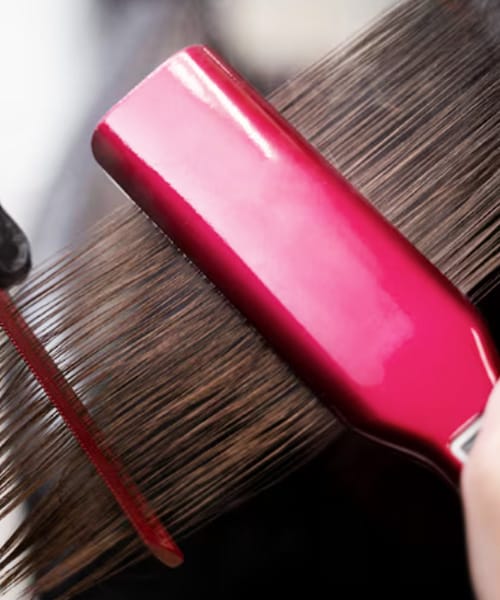
Professional users need clearly documented specifications.
Product Specification Control
A complete product specification should identify:
- Hair material
- Cuticle direction
- Length
- Texture
- Color
- Strand weight
- Connector design
- Tool compatibility
- Removal method
- Packaging format
Compatible Tool Systems
The extension hair and application hardware should be approved as one system. Similar-looking connectors may not perform correctly in a different tool.
Color and Texture References
Physical samples and consistent shade references improve repeatability.
Wavy and curly samples should be evaluated after washing so the approved reference represents actual performance.
Customized Strand Density
Different installation zones may require different strand weights.
A product intended for fine side sections may need a lighter design than one intended for stronger back sections.
Packaging and Labeling Requirements
Clear packaging can identify the product version, color, texture, length, connector system, and compatible tool.
This reduces confusion when a salon carries several extension methods.
Quality-Control Documentation
Salons and brands requiring color, texture, strand, connector, or packaging adjustments can define their custom 6D extension specifications through approved samples and written quality requirements.
Reliable documentation makes repeated production easier to evaluate and reduces dependence on unclear product names.
Conclusion
6D human hair extensions differ from traditional methods mainly through their structured, tool-assisted multi-strand application process. The system can reduce repetitive preparation and support consistent spacing, but the product name alone does not guarantee hair quality, comfort, security, or natural blending.
The strongest results come from compatibility.
The human hair must match the wearer’s natural texture and density. The extension strands must match the connectors and application tool. The stylist must understand the system-specific sectioning, closure, removal, and maintenance process.
Application efficiency should never replace careful evaluation. Each connector still needs to be checked, each natural section must carry an appropriate load, and the final density must transition gradually into the wearer’s own hair.
When the fibers, hardware, technique, and maintenance routine work together, 6D human hair extensions can provide controlled placement, flexible movement, and a natural-looking transformation.
FAQ
What are 6D human hair extensions?
6D human hair extensions are prepared extension strands installed with a compatible tool-assisted system. The method is designed to position several small attachments during one organized application sequence while maintaining separate strands for controlled density and movement.
Does 6D mean six strands are always installed at once?
Not necessarily. Some systems are designed around six prepared strands, while others use different cartridge arrangements. The term is not a universal technical standard, so stylists should confirm the strand count, connector type, tool compatibility, and removal method for each system.
Are 6D human hair extensions suitable for fine hair?
They may suit fine hair when lightweight strands, conservative density, and carefully sized natural sections are used. Connector size alone does not determine suitability. The total weight, placement, natural hair strength, and available coverage must also be assessed.
Can 6D human hair extensions be reused?
Some systems support reuse when the human hair remains in good condition and the connectors can be removed and prepared correctly. Reusability depends on the product design, fiber quality, removal technique, heat exposure, maintenance, and compatibility with the reinstallation tool.
How should 6D human hair extensions be maintained?
Keep the roots separated, brush from the ends upward, dry the connector area completely, and avoid heavy buildup near the attachments. Professional maintenance is needed when connectors move away from the scalp, rotate, become visible, or collect tangled shed hair.