Table of Contents
Introduction
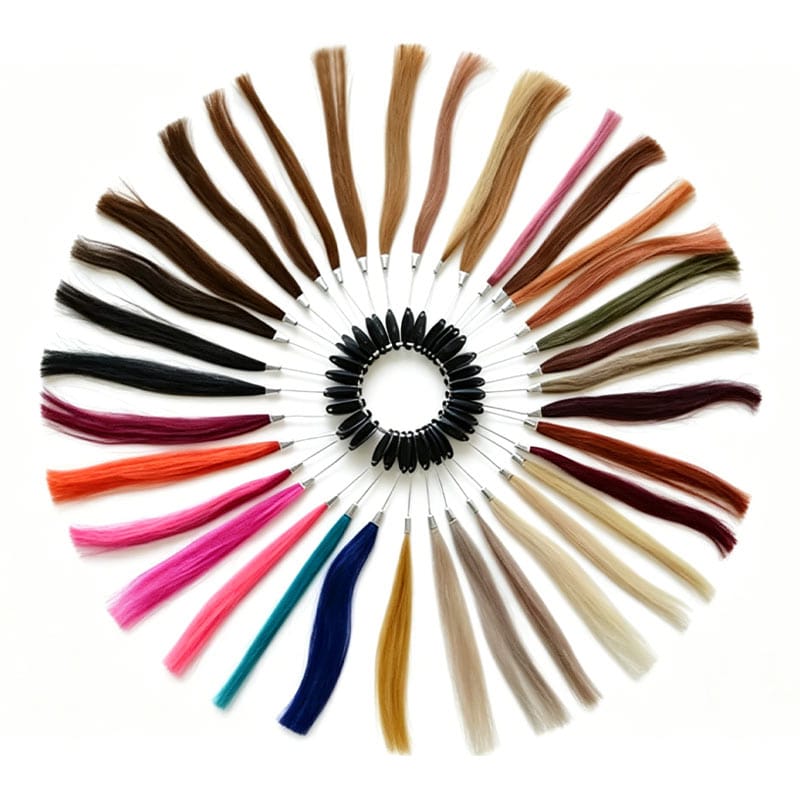
Micro link hair extensions are a strand-by-strand extension method that uses small rings, beads, or tubes to connect extension hair to selected sections of natural hair. They are also commonly described as micro ring, micro bead, micro loop, or I-tip extensions, although the exact product structure can vary.
The individual attachment format gives a stylist detailed control over color placement, density, length, and movement. A few strands can be used to support a specific area, or a larger installation can create a complete transformation.
However, the small size of the connector does not automatically make the method invisible, comfortable, or suitable for every wearer. The result depends on the relationship between the extension strand, the natural hair section, the bead, the installation technique, and the maintenance routine.
Before choosing micro link hair extensions, consider four connected factors:
- Load: how much extension weight each natural section must support
- Installation: how accurately each strand is sectioned, positioned, and secured
- Natural match: how well the color, texture, diameter, and density blend
- Keep-up: how the wearer cleans, dries, brushes, and maintains the attachments
Together, these factors form the LINK framework. This framework helps you judge the complete extension system instead of focusing only on softness, bead size, or the number of installed strands.
1. Micro Link Hair Extensions Use Small Mechanical Connectors
The defining feature of micro link hair extensions is the small connector used to join extension hair to natural hair. Unlike a wide adhesive panel or continuous weft track, each link usually supports one prepared extension strand or a small group of hair.
Understanding the Micro Link Structure
A typical micro link system contains three functional components:
- A prepared extension strand
- A selected section of natural hair
- A small ring, bead, or tube
The extension strand and natural hair are guided through the connector. A professional tool then closes or compresses the connector sufficiently to hold the two sections together.
The attachment must remain secure without crushing, sharply bending, or overloading the natural hair. If the connector is closed unevenly, the strand may slip, rotate, or create concentrated pressure.
Micro Links, Micro Rings, and Micro Beads
The terms micro link, micro ring, and micro bead are often used for closely related systems. The general category of hair extension integration methods includes micro and nano rings alongside tapes, bonds, wefts, and other attachment formats.
The names do not always describe an identical product. Connectors may differ in:
- Diameter
- Length
- Shape
- Metal composition
- Internal lining
- Surface coating
- Closing method
- Reopening method
For this reason, product names should not replace physical inspection. Two beads sold under the same general term may require different pliers, strand sizes, or installation pressure.
Why Connector Design Matters
The connector affects security, concealment, comfort, and maintenance.
A larger bead may be easier to handle but harder to conceal beneath fine hair. A smaller bead may look discreet but provide less internal space for the natural and extension hair. An internal lining may improve grip and cushioning in some systems, but compatibility still depends on the strand and section size.
The most suitable connector is not automatically the smallest one. It is the connector that can hold the intended strand securely while allowing the surrounding hair to move naturally.
2. Hair Quality and Attachment Quality Are Separate
A secure connector does not guarantee high-quality extension hair. Likewise, soft human hair does not compensate for an inconsistent or poorly finished attachment.
These two quality areas should be inspected separately.
Human Hair Fiber Condition
The extension hair should be examined from the attachment area to the ends.
Look for:
- Consistent strand strength
- Manageable surface texture
- Controlled dryness
- Limited split or broken fibers
- Appropriate end fullness
- Predictable response to washing
- Natural movement
Initial softness can be influenced by finishing treatments. A better test is how the hair behaves after cleansing, drying, brushing, and controlled styling.
Cuticle Alignment
The cuticle is the outer surface of a human hair fiber. When extension strands remain aligned in a consistent root-to-tip direction, they generally interact with less opposing friction.
Cuticle alignment does not eliminate tangling. Hair can still knot because of dryness, buildup, friction, poor brushing, or incompatible textures. It does, however, remove one possible source of unnecessary strand resistance.
Strand Density and End Fullness
The density of an extension strand should suit the intended area of installation.
A strand designed for a stronger back section may be too heavy for a delicate side area. A very lightweight strand may suit fine hair but may not create enough density beside thick, blunt natural ends.
End fullness also affects blending. Thin ends can create a soft, tapered result, while fuller ends may better support dense or blunt hairstyles.
Connector Consistency
Place several strands beside one another before installation.
The connectors should remain reasonably consistent in:
- Size
- Shape
- hair quantity
- Tip alignment
- Surface finish
- Flexibility
Large differences between individual strands make sectioning and weight distribution less predictable.
3. Micro Link Hair Extensions Require Precise Sectioning
Sectioning is one of the most important parts of a micro link installation. Each attachment depends on a small natural hair section, so an error is concentrated rather than distributed across a wide panel.
Matching the Natural Section to the Extension Strand
The natural section must be large enough to support the extension strand but small enough to fit comfortably inside the bead.
A section that is too small may carry excessive load. A section that is too large may prevent the connector from closing correctly or allow the extension to slip.
Good sectioning should create a balanced relationship between:
- Natural hair strength
- Extension strand weight
- Bead capacity
- Placement zone
- Desired movement
The number of installed strands is less important than whether every strand is properly supported.
Following the Natural Growth Direction
Hair grows and falls in different directions across the head. The attachment should follow the natural direction of the section rather than forcing it into a fixed pattern.
A strand installed against the growth direction may:
- Twist at the root
- Lift away from the head
- Become visible
- Create pulling
- Catch during brushing
The result should be evaluated during movement, not only while the hair is lying flat.
Avoiding Fragile Perimeter Areas
The temples, hairline, crown, and lower perimeter often contain finer or more visible hair. These areas may not provide enough strength or coverage for ordinary strand placement.
A professional installation usually keeps attachments away from fragile boundaries and visible partings. Lighter strands may be used near transition areas when the natural hair can support them safely.
Checking Every Connection Individually
Each connector should be inspected after installation.
The stylist should confirm that:
- The natural hair is distributed evenly
- No neighboring strands are trapped
- The connector is fully closed
- The strand moves freely
- The attachment is not too close to the scalp
- The bead remains separate from nearby links
A visually straight row can still contain individual connections with uneven tension.
4. Natural Results Depend on Density Distribution
A natural-looking installation does not use the same amount of extension hair in every area. Natural density changes across the head, and the extension plan should reflect those differences.
Building Volume by Zone
The back of the head often provides stronger coverage and may support greater extension density. The sides, upper sections, and perimeter usually require lighter placement.
A zone-based plan can use:
- Stronger density through the lower back
- Moderate density through internal side sections
- Lighter strands near transition zones
- No attachments in fragile or highly visible areas
This creates shape without making the installation uniformly heavy.
Creating a Gradual Length Transition
When the natural hair is significantly shorter than the extension hair, the two lengths must be connected through cutting and density placement.
Without a gradual transition, the natural ends may form a visible shelf above the extensions.
A natural transition considers:
- Existing layers
- Perimeter thickness
- Extension length
- End density
- Final styling routine
The extensions and natural hair should be cut as one combined hairstyle.
Matching Strand Diameter
Color matching receives substantial attention, but strand diameter is equally important.
Coarse extension fibers may appear heavy beside naturally fine hair. Very fine extension fibers may not provide enough visual support beside thick natural strands.
Matching diameter improves movement and reduces the amount of styling required to make the two hair types appear consistent.
Using Dimensional Color Placement
Natural hair often contains several tones. The root, surface, mid-length, and ends may reflect light differently.
Using related extension shades can create a more believable result than choosing one flat color. Individual micro links are particularly useful for controlled highlights, lowlights, and blended color distribution because each strand can be placed separately.
5. Micro Link Hair Extensions Are Not Suitable for Every Hair Type
Micro links can be adapted to many hair types, but they are not a universal solution.
Suitability depends on natural hair strength, density, scalp condition, desired result, and maintenance habits.
Fine Hair
Fine hair may support micro link hair extensions when lightweight strands, small compatible connectors, and conservative density are used.
The main challenges are:
- Limited connector coverage
- Lower load capacity
- Greater visibility near partings
- Fragile perimeter sections
More attachments do not necessarily create a safer result. Total extension weight and section strength must remain balanced.
Medium-Density Hair
Medium-density hair can often provide suitable coverage and section strength for individual micro links.
However, density should still be assessed by zone. A person may have strong hair through the back but finer hair around the temples and crown.
Thick Hair
Thick hair can conceal many connector profiles, but the extension density must be sufficient to blend with the natural ends.
If thick natural hair is paired with too little extension hair, the result may look thin below the natural perimeter.
Short Hair
Short hair requires enough upper length to conceal the beads and create a gradual transition.
Attachments placed too high may become visible. A dramatic increase in length can also expose the difference between the natural haircut and extension section.
Fragile Hair and Sensitive Scalps
Hair with active breakage, significant weakness, persistent irritation, or unexplained shedding should be professionally assessed before installation.
An extension system should not be used to disguise an unresolved hair or scalp concern. Persistent pain, burning, or pulling after installation requires prompt attention.
6. Micro Link Hair Extensions Differ From Other Methods
Each extension method distributes weight and movement differently. The best choice depends on natural hair, styling habits, installation goals, and professional experience.
| Extension method | Attachment format | Placement control | Movement | Main strength | Main consideration |
|---|---|---|---|---|---|
| Micro link hair extensions | Individual strands secured with small beads | Very high | Independent strand movement | Detailed color and density placement | Every bead requires precise sectioning |
| Nano ring extensions | Individual strands with smaller connectors | Very high | Independent strand movement | Reduced connector profile | Limited bead space requires careful load control |
| Tape-in extensions | Flat adhesive panels | Moderate | Panel-based movement | Wide, low-profile coverage | Clean panel alignment and adhesive care |
| Bonded strand extensions | Individual preformed bonds | Very high | Independent movement | Detailed placement without metal beads | Application and removal technique are critical |
| Weft hair extensions | Continuous tracks installed in rows | Moderate | Row-based movement | Structured coverage and efficient fullness | Track weight and natural hair coverage |
Micro Links vs Nano Rings
Nano rings generally use a smaller attachment profile than conventional micro rings. This may improve concealment in some areas, but the smaller internal space also limits how much hair can pass through the connector.
The selection should be based on natural section strength and extension strand design rather than bead size alone.
Micro Links vs Tape-Ins
Micro links allow each strand to move separately and support detailed placement. Tape-ins distribute hair across wider panels and can provide broad coverage with fewer attachment sections.
Micro links require more individual root separation, while tape-in systems require careful adhesive-area maintenance.
Micro Links vs Bonded Extensions
Both methods can create detailed strand placement. Micro links use mechanical connectors, while bonded systems use preformed attachment material.
The choice depends on natural hair, desired connector profile, maintenance expectations, and the technician’s training.
Micro Links vs Weft Extensions
Micro links distribute attachments across individual sections. Wefts place extension hair along continuous tracks.
A weft can create efficient row-based fullness, while micro links offer more precise control around internal layers and color zones.
7. Daily Care Must Protect Both Hair and Connectors
Micro link care has two goals: keeping the extension hair manageable and preventing the root attachments from tangling together.
Washing
Detangle the hair before washing. Apply water downward and cleanse the scalp with controlled finger movements.
Avoid aggressive circular rubbing around the beads. This movement can twist natural shed hair and neighboring extension strands together.
Rinse thoroughly because product residue can collect near small connectors.
Conditioning
Conditioner should generally be concentrated through the mid-lengths and ends.
Heavy products applied directly around the beads may contribute to buildup or slipping. Product placement should follow the instructions provided for the specific hair and connector system.
Drying the Root Area
The root and connector area should be dried completely.
Separate the strands so air can reach between the beads. Use controlled airflow rather than directing intense heat at one attachment.
Leaving the roots damp can make separation more difficult and contribute to compact tangling.
Brushing and Separating Attachments
Support the hair near the roots and begin brushing from the ends. Move upward gradually after lower tangles have been removed.
Use a brush designed to move around extension attachments. Do not force the brush across a bead.
The links should also be separated regularly with the fingers so neighboring strands do not begin forming one combined section.
Heat Styling
Human hair extensions can generally be curled or straightened when the fiber condition permits.
Use controlled temperature and suitable heat protection. Hot tools should not press directly against the bead, tip, or natural root section.
Sleeping and Exercise
The hair should be dry and detangled before sleeping. A loose braid or controlled low style can reduce friction and free movement.
During exercise or high-movement activities, secure the lengths without creating strong tension against the attachments.
8. Maintenance Is Part of the Installation System
Micro link hair extensions should not be treated as a one-time attachment service. Natural hair continues to grow and shed while the extensions are installed.
Natural Hair Growth and Connector Movement
As the natural hair grows, the bead gradually moves farther from the scalp.
This changes the way the extension strand hangs and can increase movement near the root. A connector that was initially well positioned may later become easier to see, rotate, or catch during brushing.
Trapped Shed Hair
Natural shedding continues during extension wear. Some shed strands remain trapped inside or around the bead instead of falling away.
This is expected, but the trapped hair must be managed. When it combines with neighboring sections, it can form tight root tangles.
Signs Maintenance Is Needed
Professional maintenance may be required when:
- Beads have moved noticeably away from the scalp
- Attachments begin rotating
- Root separation becomes difficult
- Links become visible
- The hairstyle loses balance
- Brushing near the roots becomes uncomfortable
- Shed hair begins forming compact tangles
Maintenance timing should be based on actual hair growth and attachment condition rather than one universal schedule.
Safe Removal and Reinstallation
Removal should use tools compatible with the bead design.
The connector is opened or released before the extension strand is separated from the natural hair. Pulling a closed bead downward can place unnecessary force on the root and damage the hair trapped inside.
Before reinstallation, the extension hair, tip, bead, and natural hair condition should all be reassessed.
9. Professional Quality Testing Goes Beyond Initial Softness
A new extension strand may feel smooth before it has been washed or styled. Professional testing should examine how the hair and connector behave under realistic care conditions.
Wash-and-Dry Testing
Wash a representative sample using a controlled routine.
Observe:
- Wet detangling
- Dry brushing
- Texture recovery
- End condition
- Strand separation
- Hair movement
- Connector stability
The sample should not be approved solely from its packaged appearance.
Connector Security Testing
Install sample strands on a training section and check whether the bead remains secure during gentle movement and brushing.
The bead should hold without cutting, crushing, or sharply bending the natural and extension hair.
Strand-Loss Observation
Some loose fibers may appear during initial handling. Persistent or concentrated shedding should be investigated.
Check whether strand loss is coming from:
- The extension tip
- Broken fibers
- An incomplete connector
- Rough handling
- Inconsistent manufacturing
Color and Texture Reproducibility
Colors should be assessed under consistent lighting. Textured hair should be washed and dried before approval.
For repeated salon or brand use, the approved reference should represent how the hair behaves after care rather than how it looks immediately after unpacking.
Batch Consistency
Compare several samples for:
- Strand weight
- Extension length
- End density
- Color
- Texture
- Tip shape
- Bead compatibility
- Wash performance
One excellent strand does not establish repeatable quality. Consistency across multiple strands and batches is more valuable for professional use.
The LINK Framework for Choosing Micro Link Hair Extensions
The LINK framework organizes the most important selection questions into four areas.
Load
Ask how much extension weight each natural hair section must support.
Evaluate the extension strand weight, natural hair strength, bead capacity, and total density. A discreet bead is not suitable when the attached strand is too heavy for the supporting hair.
Installation
Assess the precision required to section, place, close, and remove every link.
The technician should understand the specific bead, tool, tip, and maintenance method. General extension experience does not replace product-specific technique.
Natural Match
Match the extension to the natural hair in:
- Color
- Strand diameter
- Texture
- Pattern
- Density
- Movement
- End fullness
A well-hidden bead cannot compensate for incompatible hair fibers.
Keep-Up
Consider whether the wearer can maintain the roots and lengths correctly.
Micro links require careful washing, complete drying, regular root separation, controlled brushing, and professional repositioning. The method should suit the wearer’s actual routine rather than an idealized routine.
Common Micro Link Hair Extension Problems
Slipping Links
Slipping may be caused by an incorrect bead size, incomplete closure, unsuitable section size, product buildup, or insufficient natural hair inside the connector.
Repeated slipping should be diagnosed rather than corrected by applying more pressure.
Visible Beads
Beads may become visible when they are too large, placed too close to a parting, installed beneath insufficient coverage, or positioned against the natural growth direction.
Repositioning is often more effective than adding extra hair over an unsuitable attachment.
Root Tangling
Root tangling usually develops when shed hair, neighboring strands, and extension hair are allowed to combine around the attachments.
Regular separation and timely maintenance help prevent small tangles from becoming compact sections.
Uneven Tension
A strand may feel tight when the natural section is too small, the bead is positioned too close to the scalp, or neighboring hair has been trapped.
Every uncomfortable connector should be checked individually.
Dry Ends
Extension hair does not receive natural scalp oils in the same way as growing hair.
Dryness can be influenced by previous processing, heat styling, friction, harsh cleansing, or insufficient conditioning. Product buildup may make the hair feel coated without improving its underlying condition.
Scalp Discomfort
Persistent pain, burning, irritation, or strong pulling should not be accepted as a normal adjustment.
The section size, bead position, connector closure, strand weight, and scalp condition should be assessed by a qualified professional.
Micro Link Hair Extensions for Salons and Hair Brands
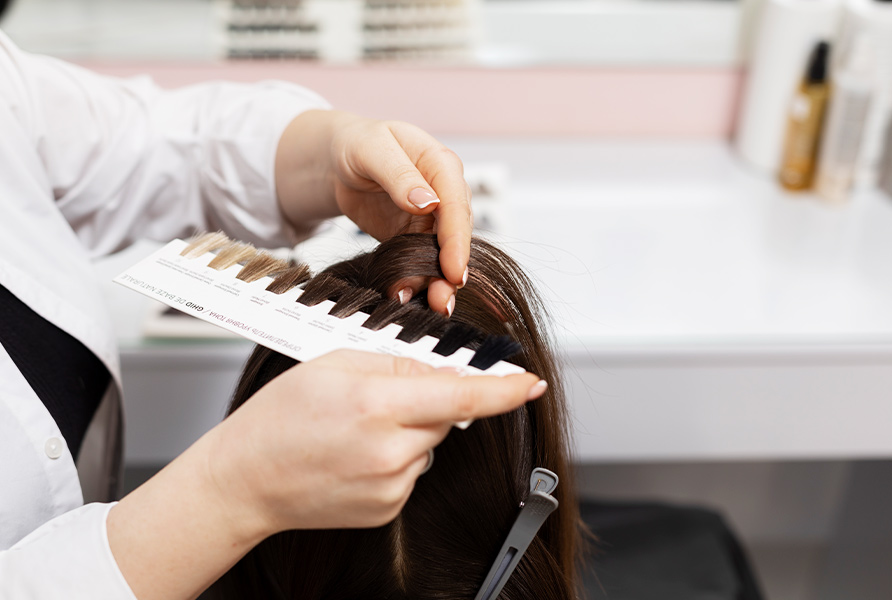
Professional buyers need repeatable specifications, not only an attractive initial sample.
Product Specification Control
A complete micro link specification should identify:
- Human hair type
- Cuticle direction
- Length
- Texture
- Color
- Strand weight
- Tip shape
- Bead size
- Bead lining
- Compatible tools
- Packaging format
The micro ring and link bead extension range can be organized around the intended installation method, strand design, connector profile, and target hair type.
Color and Texture References
Physical samples and controlled shade references support more consistent results than color names alone.
Waves and curls should be evaluated after washing so the approved reference reflects actual pattern behavior.
Connector Compatibility
Extension tips, beads, loops, needles, and pliers should be tested as one working system.
A similar-looking bead may not close correctly around a different tip. Compatibility testing helps reduce installation inconsistency and removal problems.
Customized Strand Weight
Different installation zones may require different strand densities.
Lighter strands may suit visible side sections, while stronger back areas may support fuller extensions. Custom strand planning can improve both appearance and load distribution.
Packaging and Labeling
Clear packaging should identify the shade, texture, length, strand design, connector system, and compatible application tools.
Accurate labels reduce confusion when a salon or distributor manages several extension categories.
Quality-Control Documentation
Brands and professional buyers can define custom micro link hair extension requirements for color, texture, strand weight, tip construction, bead compatibility, labeling, and packaging.
Approved samples, written specifications, and repeatable testing methods provide stronger quality control than broad grade names.
Conclusion
Micro link hair extensions offer detailed control over strand placement, color, density, and movement. Their individual connectors can create a discreet result, but bead size alone does not determine quality or suitability.
The LINK framework provides a practical way to evaluate the complete method.
Load determines whether the natural section can support the extension. Installation controls placement, tension, and connector security. Natural Match connects the extension fibers with the wearer’s hair. Keep-Up determines whether the result can remain manageable as the natural hair grows.
The most successful installation is not the one with the most strands or the smallest beads. It is the one that balances extension weight, natural hair strength, connector design, accurate blending, and realistic maintenance.
FAQ
What are micro link hair extensions?
Micro link hair extensions attach prepared strands to small sections of natural hair using rings, beads, or tubes. Each connection is installed separately, allowing detailed control over color, density, and placement. They may also be called micro ring, micro bead, or I-tip extensions.
Are micro link hair extensions suitable for fine hair?
They may suit fine hair when lightweight strands, compatible small beads, and conservative density are used. The stylist must avoid fragile areas and ensure every natural section can support the extension. Connector size alone does not determine whether the method is suitable.
Do micro link hair extensions use glue or heat?
Conventional micro link installation uses a mechanical bead or ring rather than adhesive or heat to form the attachment. Heat may still be used later for styling human hair lengths. Product structures vary, so the exact installation and care instructions should always be confirmed.
Can micro link hair extensions be reused?
Many micro link strands can be reused when the human hair, tip, and connector area remain in suitable condition. Reuse depends on fiber quality, removal technique, styling exposure, maintenance, and whether the strand can be prepared safely for another installation.
How often do micro link hair extensions need maintenance?
Maintenance depends on natural hair growth, placement, bead condition, and daily care. Professional attention may be needed when the links move away from the scalp, rotate, become visible, collect trapped shed hair, or become difficult to separate and brush around.