Table of Contents
Introduction
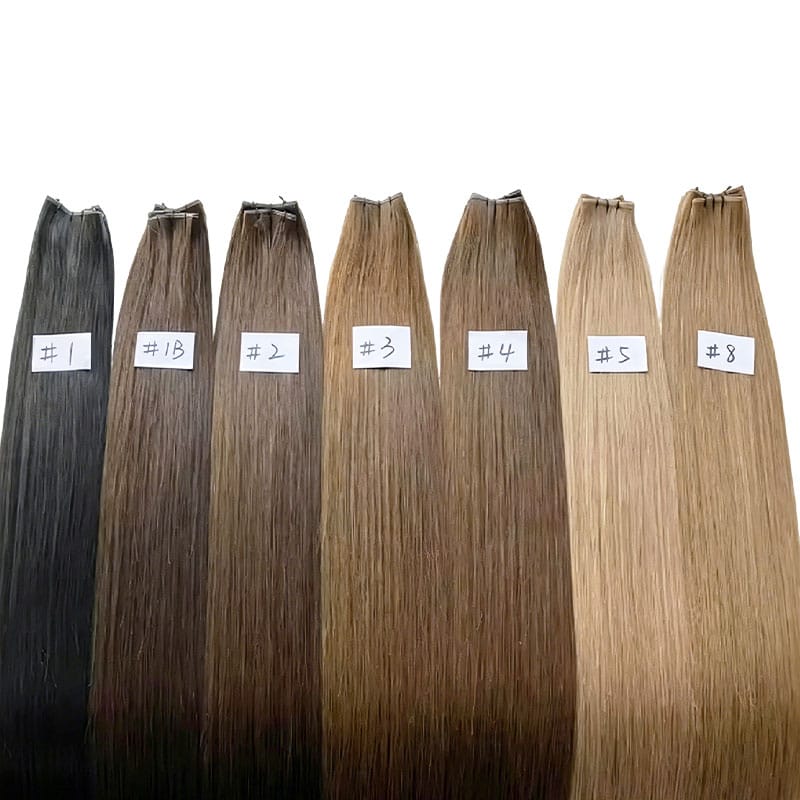
Genius weft hair extensions have become a popular choice for people who want the fullness and versatility of traditional weft extensions with a thinner, more flexible attachment area. Their appeal comes from the way the upper track is constructed: instead of relying on a bulky seam, a genius weft is designed to sit closer to the head while still holding enough extension hair to create noticeable length and volume.
That slim profile, however, should not be the only reason to choose this type of extension. The quality of genius weft hair extensions also depends on the stability of the track, the consistency of hair density, the condition of the ends, texture matching, shedding control, flexibility during installation, and how well the extension behaves after washing and styling. A very thin weft made with inconsistent hair can still create a poor wearing experience.
Genius wefts belong to the broader category of hair extensions, but their construction gives stylists more flexibility when designing professional weft installations. Understanding what makes them different is useful not only for wearers but also for salons, extension specialists, brands, and buyers evaluating extension quality for repeated use.
This guide explains how genius wefts are made, how they compare with traditional wefts, what makes a good product, how natural hair affects installation, and which practical factors should be checked before selecting them.
What Are Genius Weft Hair Extensions?
Genius weft hair extensions are continuous tracks of extension hair secured along a relatively thin and flexible upper seam. The weft is installed as part of a professional extension row, allowing the added hair to create more length, volume, or both without relying on individual strand attachments.
The main difference is found at the top of the weft. Conventional machine-made wefts often use a thicker stitched seam to hold the hair securely. Genius wefts are designed to reduce that bulk, which can help the extension sit closer to the scalp and make the finished row easier to conceal beneath natural hair.
Another important feature is adaptability. Many genius weft constructions are intended to be customized to different row widths, giving stylists more control when working around the back, sides, and curved areas of the head. This can be useful because a single straight track rarely fits every part of the installation equally well.
However, “genius weft” is a product-category name rather than a universal manufacturing standard. Different manufacturers may use different track structures, hair densities, processing methods, and quality-control procedures. For that reason, the product should be evaluated according to how it performs rather than simply according to the label used to describe it.
Why Genius Weft Construction Matters
The upper seam is easy to overlook because the extension hair itself receives most of the visual attention. In practice, the track plays a major role in comfort, concealment, flexibility, and installation quality.
A good genius weft needs to balance thinness with stability. Making the seam extremely thin without sufficient structural control may increase the risk of inconsistent shedding or damage during handling. Adding too much reinforcement may create the opposite problem by increasing bulk and reducing flexibility. The strongest design is therefore not necessarily the thinnest possible design, but one that remains low-profile while still performing reliably through installation, wear, removal, and possible reuse.
Flexibility is equally important because the human head is curved. A rigid track can sit awkwardly around side sections or create points where the extension does not follow the natural contour of the head. A more flexible weft can adapt to the installation row while allowing the hair to move naturally.
Hair distribution along the track should also remain consistent. If one part of the weft carries substantially more hair than another, the finished row can look uneven and may place inconsistent weight on the supporting natural hair. Even density gives the stylist more control over the final silhouette.
Genius Weft Hair Extensions at a Glance
| Quality Factor | Why It Matters | What to Look For |
|---|---|---|
| Track profile | Affects root bulk and concealment | Thin, controlled and structurally stable seam |
| Flexibility | Helps the weft follow the head shape | Smooth bending without stiff sections |
| Hair distribution | Influences volume consistency | Even density along the full track |
| Customization | Helps fit different row widths | Clean adjustment when construction allows |
| Shedding control | Preserves extension density | Secure hair around the upper seam |
| End fullness | Affects the finished hairstyle | Consistent density through the lower lengths |
| Texture consistency | Improves natural blending | Predictable movement before and after washing |
| Color consistency | Supports repeatable results | Stable tone across sections |
| Installation compatibility | Determines practical use | Construction suited to the chosen row technique |
| Reusability | Matters for repeated professional wear | Stable track and manageable hair after removal |
The table shows why judging genius weft hair extensions by track thickness alone is too limited. Hair quality, structural consistency, and real-world performance need to be considered together.
Genius Weft vs Traditional Machine Weft
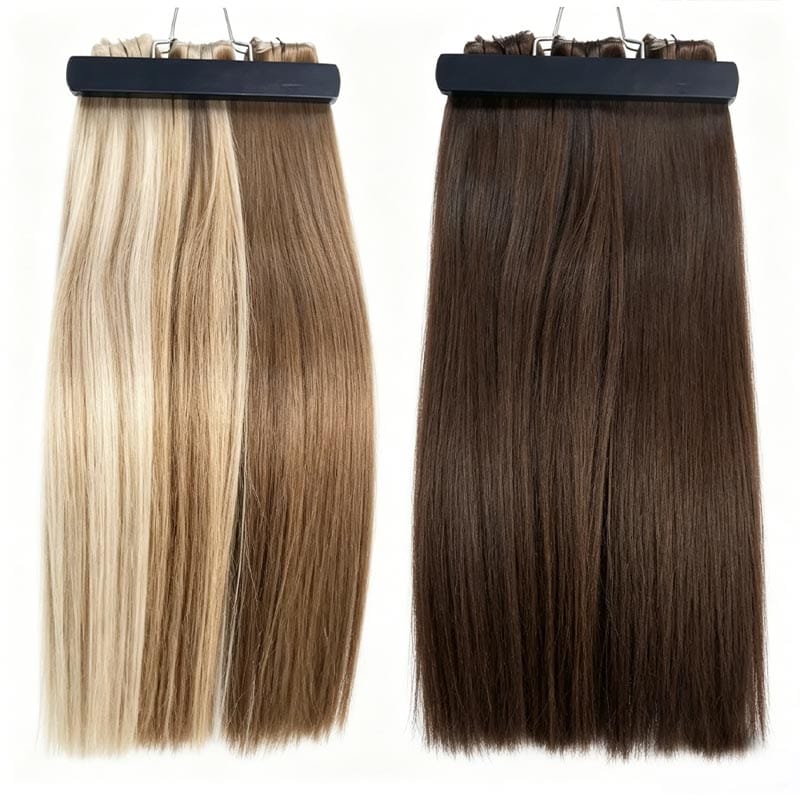
Traditional machine wefts are known for their strong stitched construction. That structure can support substantial amounts of hair and may be useful when durability and density are priorities, but the upper seam can also create more bulk at the attachment area.
Genius wefts generally aim to reduce that bulk. A thinner track can lie closer to the head and may make it easier to layer wefts without creating a pronounced ridge underneath the natural hair. This can be especially useful when concealment is important or when the wearer prefers a more flexible row.
The comparison should not stop there. A thin weft can still become a heavy installation if several dense tracks are stacked on the same natural-hair section. Total row weight matters just as much as seam thickness, because the natural hair still has to support the extension hair attached to the track.
This is why the better choice depends on the intended result. Someone seeking subtle volume may benefit from a lighter, low-profile installation, while someone seeking a larger transformation may require a different distribution strategy. The attachment structure should support the hairstyle rather than determining it.
Genius Weft vs Hand-Tied Weft
Genius wefts and hand-tied wefts are often compared because both are associated with thinner, more discreet professional extension rows. The important difference lies in how they are constructed and how they behave during customization.
Hand-tied wefts are traditionally created using a tying method that produces a fine seam. They can provide excellent flexibility, but depending on the specific construction, the track may require careful handling when it is shortened or altered.
Genius wefts use a different manufacturing approach designed to provide a thin upper track while allowing more flexibility during installation in many product designs. This can make it easier to adapt the weft to different row widths and head shapes.
Neither method should automatically be considered superior. Natural hair density, desired extension weight, row structure, customization needs, maintenance expectations, and the stylist’s installation technique all influence which construction is more appropriate.
For buyers and extension professionals comparing different structures, Yichuan Hair’s tape-in and weft hair extensions provide a useful reference point for understanding how weft construction, texture, length, and application needs can differ.
Are Genius Weft Hair Extensions Suitable for Fine Hair?
Genius weft hair extensions can be suitable for fine hair because their low-profile construction may be easier to conceal beneath limited natural coverage. However, a thin seam does not automatically make an extension appropriate for every person with fine or low-density hair.
Fine hair refers to the diameter of individual strands, while low-density hair refers to the amount of hair available in a particular area. These conditions can appear together, but they do not always require the same installation strategy. Someone with fine strands and relatively good coverage may have different support needs from someone with thicker strands but sparse density around the crown or sides.
The total weight of the extension row is especially important. Even when the track itself is light, several stacked wefts can create substantial weight. The natural hair should be able to support that weight without persistent pulling, and enough free hair should remain above the row to conceal the extension during normal movement.
A useful principle is to match extension density to the supporting natural hair rather than trying to create the maximum possible volume. A lighter, well-balanced installation can often look more natural than an overloaded row that produces too much density below comparatively fine natural hair.
Why Total Row Weight Matters
One of the most important practical lessons with genius wefts is that track thickness and total installation weight are not the same thing.
A weft can have an extremely thin upper seam while still carrying a significant amount of hair. When several pieces are layered together, the combined weight increases even if each individual track remains low-profile. The natural hair supporting the row has to manage that total load during brushing, styling, movement, and daily wear.
For this reason, installation should be planned progressively. Rather than deciding in advance that every row needs several layers, the stylist can build volume gradually and evaluate the overall shape as the installation develops. Once the desired density has been achieved, additional hair may no longer improve the result.
This approach also helps maintain visual proportion. If the natural upper sections are relatively light, extremely dense extension ends can create an obvious contrast even when the attachment is fully concealed. Good row planning therefore considers both mechanical support and visual balance.
Can Genius Weft Hair Extensions Be Cut?
Customization is one of the features commonly associated with genius weft hair extensions. Many products are designed to allow the track to be adjusted to fit different installation areas, which can give stylists greater control over row width.
This is useful because the back of the head may accommodate a broad section while the sides often require shorter, more precisely shaped pieces. A customizable weft allows the installer to work with the natural contour of the head rather than forcing a standard track width into every zone.
The important qualification is that construction varies between products. A stylist should confirm whether a specific weft is designed to be cut and whether the adjusted edge requires any particular handling. Assuming every product behaves identically can create unnecessary shedding or damage to the track.
For professional buyers, cut testing can therefore become part of sample evaluation. A product should not only look clean before customization but also remain controlled after the type of adjustment that would occur during normal installation.
How Genius Weft Hair Extensions Are Installed
Genius wefts can be installed using professional weft techniques appropriate to the natural hair and the specific product construction. Although installation methods vary, the strongest results usually follow the same core principles: support, concealment, direction, and proportion.
The supporting natural-hair section needs enough strength to manage the planned extension weight. At the same time, enough hair should remain above and around the row to keep the attachment concealed during everyday movement. The row should follow the natural contour of the head and the way the hair naturally falls, because forcing a flexible weft into an unnatural direction can reduce both comfort and movement.
Density should also be built gradually. Adding several layers immediately may create more volume than the natural hair can visually or mechanically support. A better approach is to install enough hair to reach the intended result while maintaining a smooth transition from natural hair into extension hair.
This is where a thin, flexible weft offers practical value. It gives the stylist greater control, but that flexibility still needs to be paired with careful placement.
How to Evaluate Genius Weft Hair Quality
A strong genius weft should be evaluated through a complete use cycle rather than judged only by how soft it feels when first unpacked. Initial softness can be appealing, but it says very little about how the extension will perform after washing, styling, normal wear, and removal.
Before installation, the track should be checked for consistent thickness, flexibility, density distribution, and structural control. The extension hair should also be evaluated for texture, end fullness, color consistency, and overall manageability.
During installation, the weft should follow the row without excessive stiffness or distortion. If customization is part of the intended use, the track should remain controlled after adjustment.
Normal wear provides another level of information. A reliable product should remain reasonably manageable, maintain its texture, and avoid excessive shedding or rapid deterioration through the ends. After removal, both the hair and track should be inspected again to determine whether they remain suitable for another application.
For salons, brands, and professional buyers, this full-cycle test provides much more useful information than a visual inspection alone.
Track Quality and Hair Quality Are Separate Issues
Genius weft quality can be understood more clearly by evaluating the track and the extension hair as two separate systems.
The track determines how the product behaves structurally. Its profile, flexibility, stability, and response to customization all affect the installation. A high-quality track should be thin enough for discreet placement while remaining reliable during normal handling.
The hair itself determines much of the wearing experience. Texture, strand alignment, density, end condition, tangling behavior, shedding, and response to washing influence how natural the extension looks and how easy it is to maintain.
A technically excellent track cannot compensate for extension hair that tangles excessively or deteriorates quickly. In the same way, excellent hair can still be difficult to use if the upper seam is inconsistent or unstable.
The best genius weft combines both forms of quality rather than relying on one impressive feature.
Why End Density Matters
Extension buyers often focus on the upper track because it is where the genius weft construction is easiest to see. For the finished hairstyle, however, the lower lengths and ends are equally important.
If too much density is concentrated near the track and the ends become noticeably sparse, the hairstyle may lose the fullness that the wearer wanted in the first place. This becomes more obvious as extension length increases because the lower portion represents a larger part of the final look.
Good end density does not mean every strand needs to reach exactly the same length. The goal is a balanced appearance that provides enough fullness through the lower hair to support the intended style.
For professional buyers, end condition is also useful when evaluating long-term quality. Hair that becomes excessively thin after limited use may not provide predictable results during reapplication, even if the upper seam remains structurally sound.
Choosing the Right Length, Density and Texture
Length, density, and texture should be selected together rather than treated as separate decisions.
A substantial increase in length often requires enough extension density to blend the natural haircut into the added hair. If too little extension hair is used, shorter natural layers may remain visually separate. If too much is added, the lower part of the hairstyle can become disproportionately heavy.
Texture plays a similar role. Extension hair that behaves differently from the natural hair may require constant styling to keep the two layers blended. A closer texture match usually allows the hairstyle to move more naturally while reducing unnecessary maintenance.
Color should also be evaluated in relation to movement and density. A good blend is not always achieved with a single flat tone, particularly when the natural hair contains visible dimension. The extension should look integrated from different angles rather than only matching one small section of hair.
The final decision should therefore focus on overall balance. Length creates the silhouette, density supports the shape, and texture determines how naturally the added hair moves with the wearer’s own hair.
Common Genius Weft Hair Extensions Mistakes
One of the most common mistakes is assuming that a thin seam means weight no longer matters. In reality, total row weight can become substantial when several genius wefts are stacked together. The natural hair still needs to support the complete installation, so density should remain proportional.
Another mistake is placing the row too close to visible areas. Even an extremely thin track can become noticeable if there is insufficient natural hair above it. Concealment depends on placement and coverage just as much as track profile.
Overinstallation can create both visual and practical problems. The ability to customize a genius weft makes it easy to add hair exactly where needed, but it should not encourage the installer to fill every available area. Every section should contribute to the intended hairstyle.
Professionals should also avoid evaluating quality based only on initial softness. A more meaningful assessment looks at how the extension behaves after washing, styling, wear, removal, and possible reuse.
How to Care for Genius Weft Hair Extensions
Good maintenance helps preserve both the extension hair and the installed row. Brushing should be controlled, beginning through the ends and gradually working upward rather than forcing through tangles from the root. Supporting the hair near the installed row while detangling can reduce unnecessary pulling.
Washing should clean the scalp and hair without aggressively rubbing the weft area. Conditioning products can help maintain softness through the lengths and ends, but heavy product buildup around the attachment region should be avoided.
Drying also deserves attention. The installed area should be managed properly after washing rather than being left continuously damp. At the same time, aggressive rubbing around the row can create unnecessary friction, so drying should remain controlled.
Human hair extensions can be styled with heat, but repeated excessive exposure can gradually affect texture and end condition. The most practical approach is to use only the amount of heat needed to achieve the desired result and avoid making high heat an automatic part of every styling session.
Can Genius Weft Hair Extensions Be Reused?
Genius weft hair extensions may be reusable when both the hair and upper track remain in suitable condition after removal.
The decision should be based on actual product condition rather than on the number of previous installations. A weft that retains good density, manageable texture, stable construction, and healthy-looking ends may continue to perform well. Another piece that has become significantly tangled, thin, rough, or structurally damaged may no longer meet the same standard.
The upper track should be inspected for stability, while the extension hair should be checked for shedding, texture changes, density loss, tangling, and end deterioration. Both parts need to remain functional because a good track with poor hair does not create a good extension, and attractive hair with a compromised track may not provide a reliable installation.
For professional use, reuse testing is valuable because it reveals whether the product performs beyond the first application.
What Professional Buyers Should Evaluate
For salons, extension specialists, brands, and distributors, a genius weft should be evaluated as a repeatable product rather than as a single attractive sample.
Initial appearance is only the beginning. Buyers should observe whether track thickness remains consistent, whether density is evenly distributed, whether the color and texture are predictable, and whether the product responds well to normal customization and installation.
The hair should then be assessed after washing and styling. Texture retention, shedding behavior, end condition, tangling, and overall manageability provide useful information about real-world performance.
Removal and potential reapplication add another layer of quality control. If the track remains stable and the hair still performs well after one complete use cycle, the sample provides much stronger evidence than a first-touch evaluation.
For professional sourcing, consistency is especially important. A good sample matters, but repeat orders need to reproduce the same construction, density, texture, and quality expectations.
Who Are Genius Weft Hair Extensions Best For?
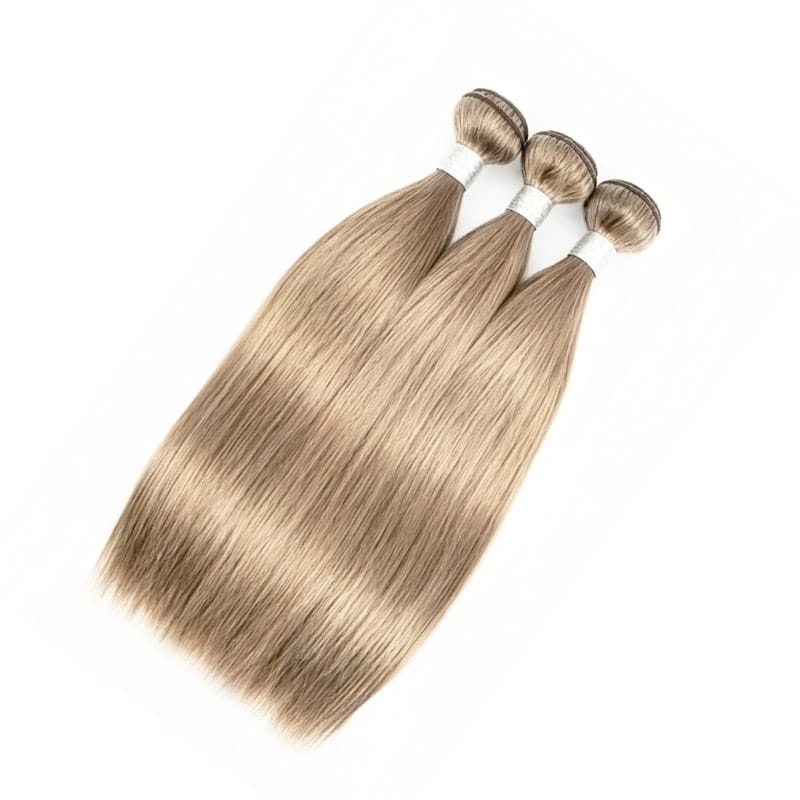
Genius weft hair extensions can be a strong choice for people who want a professional weft system with a relatively thin and flexible upper track. They can be used to create additional volume, length, or a combination of both when the natural hair offers enough support and coverage.
They may also suit stylists who want greater control over row width and extension distribution because customizable wefts can be adapted more precisely to different head shapes and styling goals.
However, natural hair condition should always guide the installation. Fine or low-density areas may require less extension weight, different placement, or fewer stacked layers. A low-profile weft does not remove the need for responsible weight distribution.
The best installation is therefore not standardized. It should be adapted to the natural hair, desired result, and maintenance routine of the wearer.
Conclusion
Genius weft hair extensions offer a useful combination of low-profile construction, flexibility, and professional customization, making them an appealing option for modern weft installations. Their main advantage is not simply that the seam is thin, but that a well-designed track can help stylists control placement and density while reducing unnecessary bulk.
The quality of the finished result still depends on much more than track design. Hair density, end fullness, texture consistency, shedding control, natural-hair support, installation technique, and maintenance all influence how the extension performs.
For wearers, total row weight and natural blending should remain more important than adding the largest possible amount of hair. For professional buyers, the most reliable evaluation follows the product through installation, washing, styling, removal, and possible reuse.
The best genius weft is therefore not simply the thinnest one. It is the one that creates a balanced relationship between track quality, hair quality, natural-hair support, installation flexibility, and consistent real-world performance.
FAQ
What are genius weft hair extensions?
Genius weft hair extensions use a relatively thin and flexible upper track designed for professional weft installations. The low-profile construction can help reduce root bulk and improve customization, while the extension hair provides additional length, density, or both.
Are genius weft hair extensions good for fine hair?
They can work well for fine hair when total extension weight, natural-hair strength, placement, and coverage are suitable. A thin seam may improve concealment, but the complete row still needs to remain proportional to the natural hair supporting it.
Can genius weft hair extensions be cut?
Many genius wefts are designed for row customization, but construction varies between products. The specific weft should be confirmed as suitable for cutting before adjustment so the track remains stable and unnecessary shedding or structural damage can be avoided.
What is the difference between genius weft and machine weft?
Genius wefts generally focus on a thinner and more flexible upper track, while traditional machine wefts often use a more substantial stitched seam. The better choice depends on natural hair density, desired volume, installation technique, concealment, and row design.
Can genius weft hair extensions be reused?
Can genius weft hair extensions be reused?
They may be reused when both the track and extension hair remain in suitable condition. After removal, the weft should be checked for structural stability, shedding, density loss, tangling, texture changes, and end condition before another installation is planned.
Need Help Choosing the Right Genius Weft Hair Extensions?
If you’re unsure which genius weft hair extensions are best suited to your desired length, texture, density, color, or professional application requirements, our team can help you evaluate an appropriate solution. Contact Yichuan Hair for personalized support and extension options designed for natural blending, flexible installation, and reliable performance.