Table of Contents
Introduction
Choosing between clip in vs tape in hair extensions is less about finding one method that is universally “better” and more about finding the attachment system that fits the way you actually wear, style, and care for your hair. Both methods can add length, volume, texture, and color dimension, but they create very different experiences once they are installed.
Clip ins give you direct control. You can apply them when you want extra volume or length and remove them when you are finished. Tape ins take the opposite approach: once properly applied, they stay integrated with your natural hair through daily styling and routine wear until removal or repositioning is needed.
That difference affects much more than convenience. It changes how the extensions distribute weight, how easily attachments can be hidden, how often you handle the hair, how your natural hair is washed, and how much maintenance becomes part of your normal routine.
The broader category of hair extensions includes several attachment methods, including clip-in and tape-in systems. Instead of judging them by a single feature, this guide compares the two methods through attachment structure, comfort, appearance, maintenance, natural-hair considerations, and lifestyle compatibility.
What Are Clip In Hair Extensions?
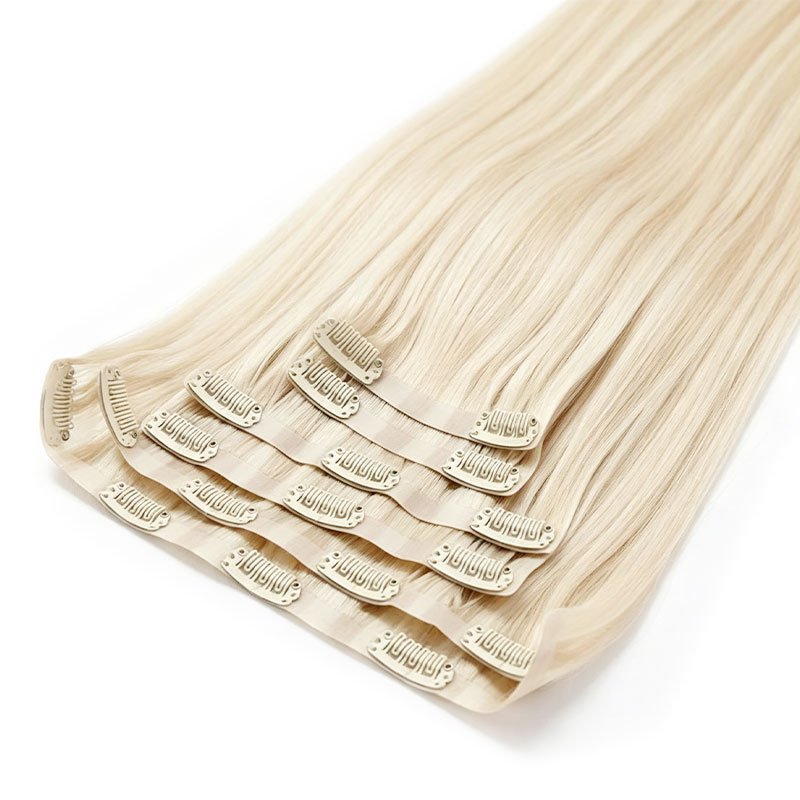
Clip in extensions are removable wefts fitted with small clips that attach directly to sections of natural hair. A complete set normally uses pieces of different widths so the wearer can distribute additional hair across different areas of the head rather than concentrating all of the volume in one place.
Their defining feature is removability. You decide when the extensions become part of your hairstyle and when they come out. This makes clip-in hair extensions particularly useful for people who want the visual effect of extensions without committing to continuous wear.
Application usually involves creating horizontal sections, lightly securing the surrounding hair, attaching each weft close enough to the root for stability, and then blending the natural hair over the attachments. The process looks simple, but good placement still matters. A clip attached too close to a visible part can show through, while too much hair attached to one small area can feel unnecessarily heavy.
Clip ins are especially practical when your hairstyle changes frequently. You can use fewer pieces for subtle fullness, add more for a dramatic transformation, or reposition wefts depending on the hairstyle. That flexibility is one of the biggest differences in the clip in vs tape in hair extensions comparison.
The trade-off is that the wearer is responsible for placement each time. Natural-looking results depend on good sectioning, suitable density, proper color matching, and choosing a set that does not overwhelm the natural hair.
What Are Tape In Hair Extensions?
Tape in extensions use thin extension panels that are attached close to the root with an adhesive system designed specifically for hair-extension application. Rather than clipping a larger removable weft onto the hair, tape sections create smaller, flatter attachment areas that remain in place during normal daily wear.
They are therefore better described as a semi-permanent extension method. Once installed, you style your own hair and the extensions as one integrated head of hair instead of attaching and removing the pieces for each use.
A well-planned tape-in installation depends heavily on section size. Too much natural hair between attachment panels may prevent a secure application, while too little hair can place excessive demand on a small section. Placement must also leave enough room around the hairline, crown, and visible parting areas to keep attachments concealed.
For readers comparing the construction and styles available within this method, Yichuan Hair’s tape-in and weft hair extensions category shows how tape-based extensions sit within a broader range of professional extension structures.
The main attraction of tape ins is continuity. You wake up with the additional length and volume already installed. There is no need to rebuild the extension layout each morning. In return, washing, brushing, styling, and product application all have to account for the attachments.
Clip In vs Tape In Hair Extensions at a Glance
The clearest way to compare these methods is to look beyond the finished hairstyle and examine what you need to do before, during, and after wearing them.
| Comparison Factor | Clip In Hair Extensions | Tape In Hair Extensions |
|---|---|---|
| Attachment | Small clips fixed to removable wefts | Flat adhesive attachment sections |
| Wearing Style | Temporary and removable | Semi-permanent continuous wear |
| Installation | Can usually be applied by the wearer | Careful professional-style placement is preferred |
| Removal | Removed whenever desired | Requires controlled removal of adhesive attachments |
| Daily Routine | Extensions can be removed before sleeping or washing | Extensions remain integrated into the daily routine |
| Placement Flexibility | High; pieces can be repositioned for different styles | Placement stays relatively consistent between maintenance sessions |
| Concealment | Depends on natural density and clip position | Flat attachment can be discreet when correctly placed |
| Maintenance | Hair pieces can be cared for separately | Natural hair and extensions must be maintained together |
| Fine Hair Consideration | Clip size, weft weight, and coverage matter | Section size, tape visibility, and weight distribution matter |
| Best Fit | Occasional use and flexible styling | Frequent wear and a more permanent routine |
This table reveals an important point: the real difference is not simply “clips versus adhesive.” It is control versus continuity.
Clip ins give the wearer more control over when and how additional hair is used. Tape ins reduce the need for daily installation but require the wearer to accept a more structured maintenance routine.
Which Looks More Natural: Clip In or Tape In Extensions?
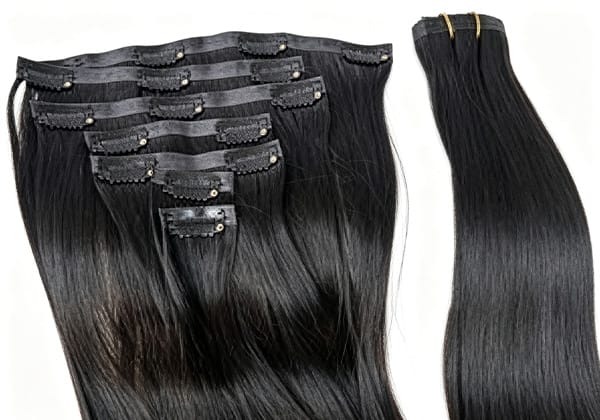
Both can look natural. The better question is whether the attachment structure matches your hair density, cut, texture, and styling habits.
Tape ins often have an advantage when the goal is low-profile attachment. Their flat construction allows the added hair to sit close to the scalp, which can create a smooth transition when placement and color matching are accurate. This is particularly useful when you want the extensions to function as part of your everyday hairstyle.
Clip ins can produce an equally convincing result, but concealment depends more strongly on the location and thickness of each weft. Someone with dense natural hair may have plenty of coverage above the clips. Someone with lighter density near the crown may need fewer or narrower wefts in upper sections.
There is also a second factor that is often overlooked: movement.
Extensions do not only need to look convincing in a still photograph. They need to move naturally when you turn your head, tie the hair back, separate a parting, or run your hands through it. A technically invisible attachment can still look unnatural if too much extension hair is concentrated in an area where the natural hair does not have enough density to support the visual transition.
For that reason, good blending begins with proportionality. The added volume should look like an extension of the wearer’s existing hair rather than a separate layer attached underneath it.
Comfort and Everyday Wear
Comfort is one of the most personal parts of the clip in vs tape in hair extensions decision.
Clip ins create identifiable attachment points. If a set contains substantial hair and that weight is concentrated on a small number of clips, you may notice those points during extended wear. The solution is not simply using fewer clips. Fewer attachment points can sometimes create more concentrated load. Proper distribution across suitable sections is what matters.
Tape ins spread the attachment across flat sections, which can feel balanced when installed correctly. Because they remain attached, however, the wearer has less freedom to change the location whenever an area feels inconvenient. Initial sectioning therefore has a greater effect on long-term comfort.
Sleeping habits create another major difference. Clip ins can be removed before bed, allowing both the natural hair and extension set to remain separate overnight. Tape ins stay in place, so brushing, securing the hair, and avoiding unnecessary pulling become part of the bedtime routine.
This is why comfort cannot be judged only during installation. Think about a full week rather than the first hour. Ask how the extensions will feel during work, exercise, washing, styling, sleeping, and tying the hair up. The better method is the one that continues to feel manageable after the novelty of the installation has passed.
Installation and Removal Differences
Clip ins offer a relatively direct application process, but repeatability matters. If you position the pieces differently every time, the hairstyle may not blend consistently. A useful approach is to learn a reliable placement pattern for your normal hairstyle and adjust only when you deliberately change the finished look.
The process usually starts at the lower back section of the head and progresses upward. Wider wefts can cover broader areas while narrower pieces help balance the sides. The highest attachment point should remain comfortably below any parting where a clip could become visible.
Tape-in installation requires more disciplined sectioning because the extensions will remain in those positions. Placement must account for natural movement, sufficient hair between attachments, room around the hairline, and how the wearer normally parts or styles the hair.
Removal is equally important. Clip ins should be unclipped before being pulled away from the hair. Tape-ins require a controlled removal process so the attachment releases without unnecessary pulling or aggressive separation of natural strands.
The attachment itself is only half of extension safety. Application and removal technique are equally important.
Maintenance and Reusability
Clip ins and tape ins can both be reusable, but they age in different ways because they are exposed to different routines.
Clip ins are not necessarily washed every time natural hair is washed. Because they can be removed, you can keep them away from unnecessary moisture, friction, sleep movement, and repeated exposure to styling products. Proper storage also helps maintain shape and reduces tangling between wears.
Tape ins share more of your normal routine. Shampooing, conditioning, drying, brushing, and heat styling must all be performed with awareness of the attachment areas. Products that create excessive residue close to the tapes can affect the installation, while rough brushing can put unnecessary stress on both the extension hair and natural hair near the root.
Hair quality is another major variable.
Two extension sets using the same attachment method may perform very differently if one has inconsistent cuticle direction, heavy processing, weak ends, poor density distribution, or inaccurate texture matching. Attachment type determines how the product is worn; fiber quality determines how the hair itself behaves through repeated use.
A more useful way to think about lifespan is therefore:
hair quality + frequency of wear + washing habits + heat exposure + brushing technique + attachment care.
No single attachment method can compensate for poor care or low-quality hair.
Which Is Better for Thin or Fine Hair?
This is one of the most common questions in the clip in vs tape in hair extensions discussion, but “thin hair” is too broad to produce one automatic answer.
Fine strands and low overall density are different issues. A person may have fine individual strands but a relatively full head of hair, or thicker strands with sparse density in certain areas. Extension selection should account for both.
For clip ins, the key questions are whether there is enough natural hair to conceal the clips and whether the weft weight is appropriate for each section. Loading a heavy weft onto a very small section simply to create more volume can work against the goal of comfortable, natural-looking wear.
Tape ins can provide a flatter attachment profile, but that does not mean every tape placement is automatically suitable for fine hair. Attachments placed too high may become visible through sparse coverage, and sections need enough natural hair to distribute the extension weight appropriately.
For either method, the useful principle is the same: do not ask how much extension hair can be attached. Ask how much the natural hair can comfortably support while still moving and looking natural.
That change in thinking often produces a better result than simply choosing whichever system is marketed as “best for fine hair.”
Which Method Is Less Damaging to Natural Hair?
Neither clip ins nor tape ins should be treated as inherently damage-free. Hair stress usually comes from the relationship between attachment weight, placement, wear habits, removal, and the condition of the natural hair.
Clip ins have one clear advantage: they can be removed whenever you do not need them. This reduces continuous attachment time. However, repeatedly fastening a heavy clip to the same small section day after day can still create unnecessary stress.
Tape ins distribute hair through flatter attachment areas, but they remain installed. Poor sectioning, rough removal, tangled regrowth, or repeatedly pulling on the attachment area can all create problems.
A useful professional principle is to watch for concentration of force.
If an attachment repeatedly pulls one small area, feels uncomfortable, or causes the surrounding hair to behave differently, simply tolerating it is not a good maintenance strategy. Extension placement should work with natural hair movement rather than against it.
You should also separate extension-related breakage from normal shedding. Hair that naturally sheds while trapped inside a semi-permanent attachment can become visible when the extension is removed. That observation alone does not necessarily mean the extension caused every released strand.
Clip In vs Tape In Hair Extensions for Different Lifestyles
The most useful comparison begins with your routine rather than the product.
If you mainly want extra length for selected hairstyles, events, photo sessions, or occasional changes, clip ins usually make more sense. You gain the visual transformation without making extensions part of every shower, sleep routine, or styling session.
If you want to wake up with the added length already in place and expect to wear extensions consistently, tape ins often fit that preference better. The installation requires greater commitment, but there is less daily setup.
People who frequently change their parting may appreciate the repositioning freedom of clip ins. People who prefer a stable everyday hairstyle may value the consistent placement of tape ins.
Your tolerance for maintenance also matters. Some people would rather spend a few minutes attaching extensions only on the days they want them. Others would rather complete a more involved installation and then treat the extensions as part of their normal hair.
Neither preference is more professional or more correct. They simply represent different ways of using hair extensions.
A Practical Decision Framework
Instead of making your decision from a list of generic advantages, use four practical tests.
The Commitment Test
Ask yourself: “Do I want extensions to be part of my everyday hair, or do I want to choose when I wear them?”
If the answer is “only when I want them,” clip ins usually align better with your routine. If the answer is “I want them integrated most of the time,” tape ins are more likely to fit.
The Concealment Test
Think about your natural density and usual hairstyles. Do you have enough coverage to hide clips comfortably? Would a flat tape attachment be easier to conceal? Do you frequently wear high ponytails or expose areas where attachments could show?
Attachment invisibility depends on the hairstyle around it.
The Maintenance Test
Consider how you wash, brush, sleep, and style your hair.
Clip ins let you separate extension maintenance from natural-hair maintenance. Tape ins make them part of the same routine. Choose the approach you are more likely to maintain consistently, not the one that merely sounds easier during the initial installation.
The Control Test
Ask how often you change your mind.
If you enjoy changing length, volume, placement, or hairstyle regularly, removable wefts offer greater flexibility. If you prefer a consistent look with fewer daily decisions, semi-permanent placement may feel simpler.
These four tests produce a more reliable recommendation because they focus on real behavior rather than product labels.
Which Is Better: Clip In or Tape In Hair Extensions?
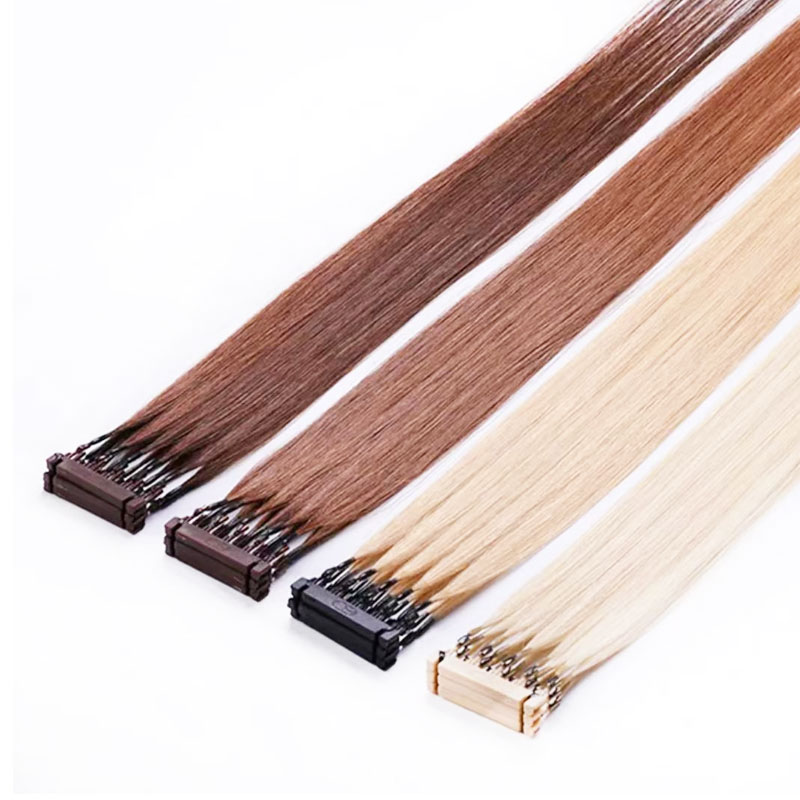
If your priority is flexibility, removable wear, easy hairstyle changes, and the ability to keep extensions out of your sleeping and washing routine, clip ins are usually the stronger choice.
If your priority is continuous wear, flatter fixed attachments, consistent daily volume, and less need to install extensions each morning, tape ins may be the better fit.
For occasional users, clip ins normally offer more control. For people who want extensions integrated into their regular appearance, tape ins often provide a smoother routine.
But the attachment method should not be the only quality criterion.
Color matching, hair density, strand alignment, texture consistency, weft construction, attachment quality, and finishing all influence the final result. A carefully selected extension made from suitable hair and installed correctly will usually perform better than choosing a method simply because it is popular.
The best answer to clip in vs tape in hair extensions is therefore not “clip ins always win” or “tape ins always win.” The better method is the one that matches your natural hair, desired frequency of wear, styling habits, maintenance commitment, and expectations for control.
Conclusion
Clip in and tape in extensions solve the same broad styling problem in two very different ways.
Clip ins are built around flexibility. They work well when you want to decide exactly when extra length or volume becomes part of your look. Tape ins are built around continuity. They suit users who prefer an installed extension system that stays integrated with their natural hair through everyday styling.
For a reliable decision, focus on four questions: how often you plan to wear extensions, how easily attachments can be concealed in your hair, how much ongoing maintenance you are comfortable with, and how frequently you change hairstyles.
Once those questions are answered, the choice becomes much clearer. The goal is not simply to attach more hair. It is to choose a system that looks proportionate, feels comfortable, behaves naturally, and fits the way you actually live with your hair.
FAQ
Which is better, clip in or tape in hair extensions?
Clip ins are generally better for flexible or occasional wear because they can be removed whenever you choose. Tape ins are better suited to people who want extensions integrated into their everyday hairstyle. The right option depends on your hair density, routine, maintenance habits, and desired wearing frequency.
Which lasts longer, clip in or tape in hair extensions?
There is no reliable lifespan based on attachment type alone. Clip ins may experience less daily wear because they can be removed, while tape ins stay exposed to regular washing and styling. Hair quality, heat use, brushing, storage, washing habits, and correct maintenance have a major influence on usable life.
Are clip ins or tape ins better for thin hair?
Either can work when the attachment weight and placement match the natural hair. Clip ins require enough coverage to conceal the clips, while tape ins need carefully sized sections and discreet placement. For fine or low-density hair, lighter, well-distributed attachments are usually more important than choosing by method alone.
Which method is less damaging to natural hair?
Damage risk depends heavily on tension, placement, removal, attachment weight, and maintenance. Removable clip ins reduce continuous wear, but repeated heavy placement can create stress. Tape ins distribute weight differently but require careful application and removal. Neither system should cause persistent pulling or discomfort.
Can clip in and tape in extensions be reused?
Both types can often be reused when the hair and attachment components remain in suitable condition. Clip ins can be stored between wears, while tape-in hair may be reapplied after proper removal and attachment preparation. Reusability depends strongly on hair quality, maintenance, handling, heat exposure, and product buildup.
Need Help Choosing the Right Hair Extensions?
If you’re unsure whether clip in or tape in hair extensions are the better fit for your hair, styling routine, or product requirements, our team is here to help. We can help you compare attachment methods, hair textures, lengths, colors, and customization options based on your needs. Contact us today for a personalized recommendation and choose hair extensions designed for a natural look, comfortable wear, and reliable performance.