Table of Contents
Introduction
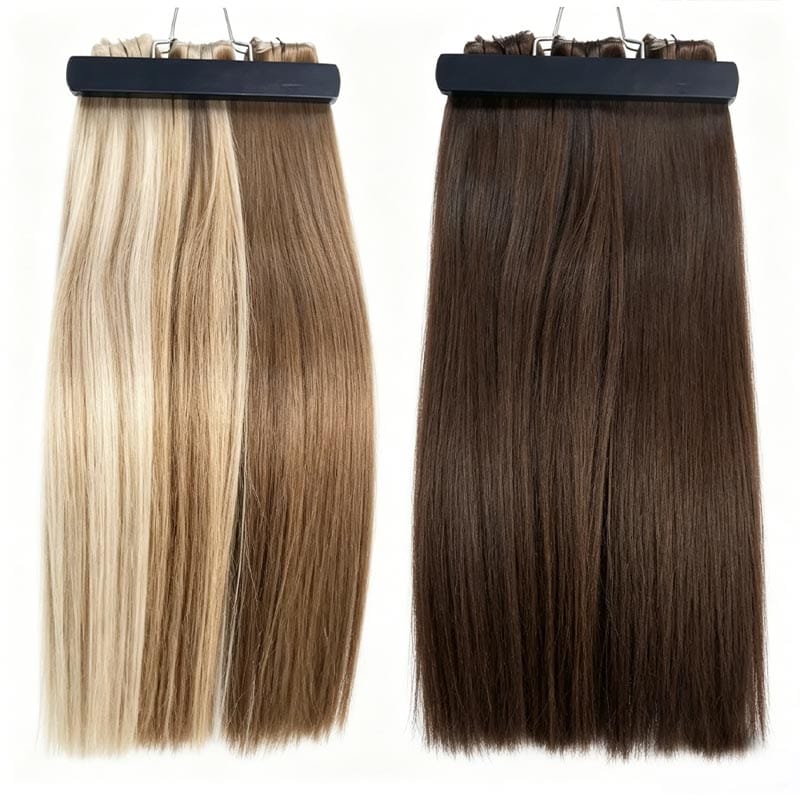
Tape in hair extensions for thin hair can be an effective way to create fuller-looking length and volume, but thin hair requires a more careful approach than naturally dense hair. The goal is not simply to attach more extension hair. A successful result depends on how well the added hair matches the natural hair in weight, density, texture, placement, and movement.
It is also important to distinguish between fine hair and low-density hair. Fine hair refers to the diameter of individual strands, while low-density hair means there are fewer strands across a particular area of the scalp. Someone may have very fine individual strands but relatively good overall coverage, while another person may have stronger strands but limited density around the crown, sides, or hairline.
That difference matters because hair extensions depend on natural hair for both support and concealment. Hair with limited density may struggle to hide attachment points, while delicate strands may require lighter extension sections even when enough hair is available to conceal them.
Tape-ins belong to the broader category of hair extensions, but their relatively flat attachment structure creates a different wearing experience from removable or point-based systems. For thin hair, that low-profile construction can be useful, provided the extension weight, placement, and maintenance routine are appropriate for the natural hair supporting it.
Are Tape In Hair Extensions Good for Thin Hair?
Tape in hair extensions can work well for thin hair because their attachment structure distributes added hair across relatively flat sections rather than concentrating the entire extension at one small point.
This can help create a smoother root area and make the attachment easier to conceal in some hairstyles. However, a flat attachment should not automatically be interpreted as a suitable attachment for every person with thin hair.
The amount of natural hair supporting each section still matters.
If a relatively heavy extension section is attached to a very small amount of natural hair, the installation may place unnecessary tension on the roots. If the attachment is positioned too close to a visible parting, even a very thin tape section may become noticeable when the hair moves.
The first question should therefore not be “How many extensions can I add?”
A more useful question is:
How much additional hair can the existing hair comfortably support while maintaining natural movement and reliable concealment?
This shift in thinking is particularly important for fine and thin hair because more volume is not always equivalent to a better result.
Why Thin Hair Requires a Different Extension Strategy
Thin hair changes the extension planning process in three major areas: support, concealment, and proportion.
Natural Hair Support
Every extension section adds weight.
The supporting natural hair needs to carry that additional weight through normal movement, brushing, styling, and daily wear. When extension density greatly exceeds the amount of natural hair supporting it, the attachment can become unnecessarily demanding on that section.
This is why lightweight, well-distributed placement can sometimes create a better result than using fewer but heavier extension pieces.
Attachment Concealment
Low-density hair gives the installer less natural coverage above the attachment.
An extension may appear completely hidden immediately after installation because the hair has been carefully arranged. Once the wearer changes the parting, tucks the hair behind the ear, moves naturally, or creates a different style, poorly positioned attachments may become visible.
Good placement therefore needs to account for movement, not just the finished installation photograph.
Visual Proportion
A natural-looking extension result should create a believable progression from the roots to the ends.
If naturally thin upper sections suddenly transition into extremely dense extension hair, the attachments may remain hidden while the overall hairstyle still looks artificial.
For thin hair, the goal should usually be proportional enhancement rather than maximum density.
How Tape In Hair Extensions Work on Thin Hair
Tape-in extensions generally use flat extension panels positioned close to the roots. Once installed, they remain integrated with the natural hair through normal daily wear instead of being removed at the end of each day.
This construction can be especially helpful when bulky attachment systems would be difficult to conceal.
However, sectioning is critical.
The natural section needs enough hair to support the added extension, but the surrounding hair also needs enough density to cover the attachment. These requirements must be balanced rather than considered separately.
An area may provide strong support but poor concealment. Another area may hide the attachment easily but contain too little natural hair to support a dense extension panel comfortably.
For users comparing different extension structures, textures, and application styles, Yichuan Hair’s tape-in and weft hair extensions provide examples of how extension construction can vary according to different styling and wearing needs.
The best placement therefore responds to the actual hair rather than following exactly the same pattern for every person.
Key Factors When Choosing Tape In Hair Extensions for Thin Hair
Choosing tape in hair extensions for thin hair involves more than selecting a preferred length and color.
The following factors work together to influence comfort, concealment, movement, and overall appearance.
| Factor | Why It Matters for Thin Hair | Better Approach |
|---|---|---|
| Attachment profile | Bulky attachments can show through low-density hair | Use flat, discreet construction |
| Extension weight | Excessive weight can increase tension | Keep added density proportional |
| Placement | Sparse areas provide less coverage | Position tapes below reliable coverage |
| Hair density | Determines how much added volume looks believable | Build fullness gradually |
| Texture | Mismatched movement exposes the transition | Match the natural texture closely |
| Length | Extreme length may require additional density | Choose a proportionate length |
| Color | Thin coverage can make tonal differences more visible | Match root and mid-length tones carefully |
| Natural hair condition | Fragile hair may tolerate less mechanical stress | Assess hair before installation |
| Styling habits | Upstyles and parting changes may expose tapes | Plan around normal hairstyles |
| Maintenance | Rough handling increases unnecessary tension | Use controlled washing and brushing |
The important takeaway is that tape-in suitability is not decided by one specification.
Attachment design, hair condition, placement, density, texture, and daily routine need to work together.
Choosing the Right Extension Density
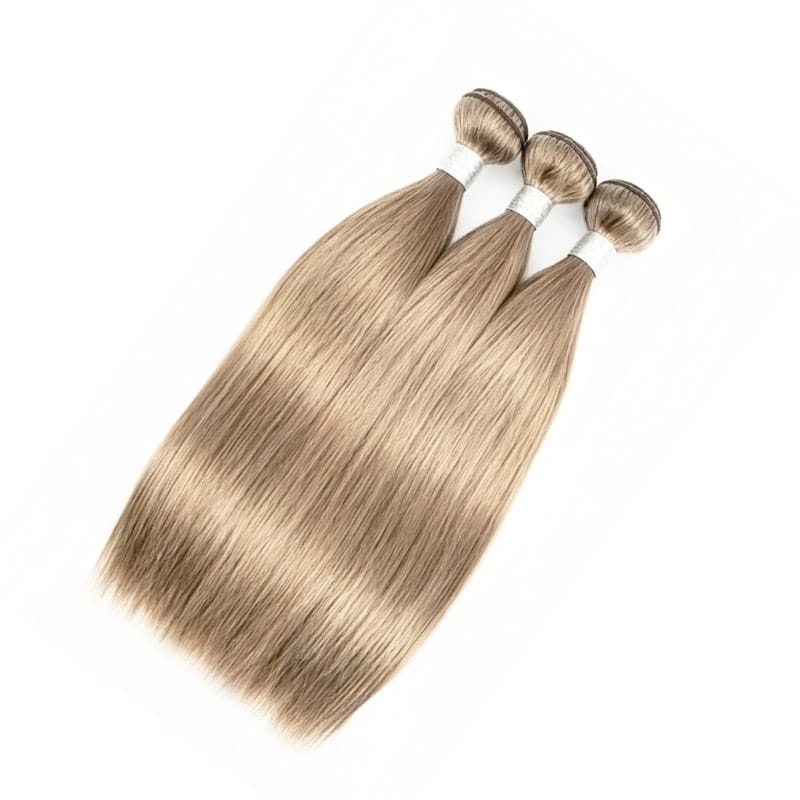
Density is one of the most important decisions when working with thin hair.
When someone wants fuller-looking hair, the natural reaction is often to add as much extension hair as possible. However, excessive density can make the transition between natural hair and extension hair more obvious.
Imagine relatively light upper sections flowing into extremely dense ends. Even if every attachment is hidden, the change in volume may reveal that additional hair has been added.
A more effective strategy is gradual density building.
The extension hair should visually continue the shape and density of the natural hair rather than creating a completely different silhouette below it.
For someone seeking subtle fullness, strategically placed sections may be enough. Someone seeking both length and volume may require greater distribution, but the extension density should still remain appropriate for the natural hair supporting it.
The objective is not to use the most hair possible.
It is to use enough hair to produce the desired result without making the hairstyle appear overloaded.
Why Lightweight Construction Matters
Two tape-in extension pieces can appear similar in width while containing different amounts of hair.
That difference matters.
For thin hair, extension weight influences how much force the supporting natural section experiences during normal movement. Lighter construction can give the installer greater flexibility to distribute volume across several appropriate areas instead of concentrating too much hair in one place.
This does not mean that every thin-hair installation must use the lightest extension available.
The natural density and strength of the hair should determine what is appropriate.
The more useful principle is proportionality: the extension section should enhance the natural hair without requiring a relatively small natural section to carry unnecessary weight.
Match Texture Before Adding More Volume
Texture matching is sometimes treated as a secondary consideration after color and length. In practice, it can have a major effect on how natural the extensions appear.
If the natural hair has soft movement while the added hair behaves very differently, the transition between the two can remain visible even when the color match is accurate.
This is particularly noticeable with thin hair because fewer natural strands may be available to blend over the extension layer.
Texture should therefore be considered before deciding how much volume to add.
A moderately full installation with well-matched texture can look more convincing than a much denser installation using extension hair that moves differently from the wearer’s natural hair.
Good blending needs to work when the hair is moving, not just when it is arranged for a photograph.
Choosing an Appropriate Length
Length and density are closely connected.
The longer the extension hair becomes relative to the natural hair, the more carefully the transition needs to be managed. Very long extensions may require additional volume through the lengths to prevent the natural hair from appearing visually disconnected from the added hair.
For thin hair, this can create a trade-off.
More density may improve the transition into additional length, but more density also means additional hair for the natural sections to support.
A slightly more moderate length can sometimes produce a stronger overall result because it allows the natural hair and extension hair to blend more easily without requiring excessive added volume.
The best length is therefore not automatically the longest available option.
It is the length that creates a convincing finished shape while remaining proportional to the natural hair.
Best Placement Strategy for Thin Hair
Placement can determine whether tape-in extensions remain discreet during normal use.
Thin hair deserves particular attention because density may vary considerably across different areas of the same head.
Keep Attachments Away From Visible Partings
The upper crown and normal parting areas usually need enough free natural hair to provide reliable coverage.
Positioning tapes too close to the top may initially create more volume near the roots, but it also increases the likelihood that the attachment becomes visible when the hair moves.
A useful concealment test is to move the hair in several directions and adjust the parting slightly rather than evaluating only one carefully styled position.
Leave Natural Hair Around the Perimeter
Hair around the face, ears, and outer hairline frequently moves during daily styling.
Leaving sufficient natural hair around these areas allows the wearer to adjust the hairstyle without immediately exposing the extension attachments.
This becomes particularly useful for people who sometimes tuck their hair behind the ears or create half-up styles.
Distribute Volume Gradually
Concentrating several dense sections in one limited area can create unnecessary weight and an obvious change in volume.
Thin hair usually benefits from a more gradual approach.
Extension sections can be distributed through areas that provide appropriate strength and coverage, allowing volume to build progressively from the natural hair into the extensions.
Design Around Everyday Hairstyles
A good extension layout should fit the wearer’s real routine.
If someone frequently changes the parting, wears partial upstyles, or moves hair away from the face, the attachment layout needs to account for those habits.
An installation that works only when the hair is worn down in exactly one position is not truly flexible.
How Many Tape In Extensions Does Thin Hair Need?
There is no universal number of tape-in extensions that suits every person with thin hair.
The correct amount depends on several variables, including:
natural density,
desired length,
existing haircut,
extension density,
hair texture,
head shape,
areas requiring additional fullness,
and whether the main objective is volume, length, or both.
A person who mainly wants to improve thin ends may need far less added hair than someone trying to create both substantial length and additional density.
Rather than selecting a fixed number, each section can be evaluated using two practical questions.
Can the natural hair comfortably support the added section?
Can the surrounding natural hair reliably conceal it?
If either answer is no, adding the section simply to increase total volume may not improve the overall installation.
This support-and-concealment method produces a more individualized result than relying on a generic quantity recommendation.
Can Tape In Extensions Damage Thin Hair?
No extension method should automatically be described as completely risk-free.
What matters is how the extension interacts with the natural hair.
Attachment weight, tension, section size, daily handling, maintenance, natural hair condition, and removal technique can all influence the result.
Attachment Tension
An extension should not create persistent pulling or discomfort.
If one attachment consistently feels much tighter than surrounding sections, that sensation provides useful information. The placement or weight may need to be reassessed.
Comfort should be monitored throughout the wearing period rather than judged only immediately after installation.
Removal Technique
Removal is as important as application.
Pulling extension sections away before the attachment has been properly released can create unnecessary mechanical stress on natural strands.
Careful removal protects the natural hair while also helping preserve extension hair intended for reuse.
Repeated Placement
Repeatedly using exactly the same natural sections can concentrate mechanical stress in those areas.
Future applications should therefore consider the condition of previously used sections rather than automatically recreating the same placement pattern.
Natural Shedding and Breakage
Naturally shed strands can remain trapped within a semi-permanent attachment until the extensions are removed.
Seeing released strands during removal therefore does not automatically mean every strand was damaged by the extensions.
More useful warning signs include persistent discomfort, visible weakening near attachment areas, unusual short broken strands, or a noticeable deterioration in the natural hair over time.
How to Care for Tape In Hair Extensions on Thin Hair
Maintenance needs to protect both the added hair and the natural strands supporting each attachment.
Washing
Wash the scalp carefully instead of aggressively rubbing attachment areas together.
The goal is to remove buildup while minimizing unnecessary tangling around the roots.
The extension lengths should also be handled carefully when wet. Rough handling can create additional tangling that later transfers unnecessary pulling toward the attachment areas.
Conditioning
Conditioning helps maintain softness and manageability through the lengths and ends.
However, heavy product buildup directly around the attachment area can interfere with the extension system.
Product placement matters as much as product choice.
Apply conditioning products where the hair needs moisture while avoiding unnecessary accumulation around the tapes.
Brushing
Detangle from the ends upward.
Trying to brush through a large knot from the root downward can transfer unnecessary force to the attachments.
Supporting the hair near the roots while working through the lengths can also reduce pulling on the natural sections.
Heat Styling
Human hair extensions can provide considerable styling flexibility, but repeated excessive heat can affect both natural and extension hair.
Use heat thoughtfully and avoid unnecessary direct exposure around attachment areas.
The objective should be achieving the desired style with the least amount of repeated stress required.
Sleeping
Because tape-in extensions remain installed overnight, bedtime care becomes part of the maintenance routine.
Detangle the hair before sleeping and keep the lengths organized to reduce uncontrolled friction and tangling.
The goal is not to prevent all movement but to prevent avoidable knots that later require aggressive brushing.
Common Mistakes to Avoid
One of the biggest mistakes when selecting tape in hair extensions for thin hair is trying to compensate for low density by adding excessive extension hair.
More hair does not automatically produce a more natural result.
If the extension density becomes dramatically greater than the natural density above it, the transition may become obvious and the natural sections may carry more weight than necessary.
Another mistake is installing attachments too close to visible upper areas.
Thin hair often provides limited coverage around the crown and parting. Leaving sufficient natural hair above the extensions generally produces better concealment than positioning tapes as high as possible.
Poor texture matching can also reduce the quality of the result. Even perfectly hidden attachments cannot compensate for extension hair that moves very differently from the natural hair.
Daily handling matters as well. Heavy product buildup, repeated aggressive brushing, excessive tension, and careless removal can all affect how the installation performs.
The quality of the extension system and the quality of the maintenance routine need to work together.
Tape In vs Other Extension Methods for Thin Hair
Tape-ins are one option rather than an automatic answer for everyone with thin hair.
Clip-in extensions provide greater flexibility because they can be removed whenever additional length or volume is not needed. However, the clips still require enough natural hair for support and concealment, and overly heavy wefts can create concentrated attachment points.
Point-based systems create another type of weight distribution. Their suitability depends on the strength and size of each supporting natural section as well as the visibility of individual attachments.
Tape-ins differ because their relatively flat panels remain integrated into daily wear.
For thin hair, the better method depends on:
how frequently extensions will be worn,
how much natural coverage is available,
how the hair is normally styled,
the condition of the natural strands,
and how much ongoing maintenance fits the wearer’s routine.
There is no universal extension method that performs identically for everyone described as having thin hair.
A Practical Framework for Choosing Tape In Extensions
Instead of choosing tape in hair extensions based on a single feature, evaluate four areas: support, concealment, proportion, and routine.
Support
Can the natural hair comfortably carry the extension section?
If the desired extension weight exceeds what the supporting section can reasonably handle, the plan should be adjusted.
Concealment
Can the attachment remain hidden during normal movement?
Check different partings, side movement, hair around the ears, and common hairstyles rather than evaluating only one finished position.
Proportion
Does the added density look like a natural continuation of the existing hair?
The goal is to improve fullness without creating an obvious contrast between lighter natural sections and much denser extension hair.
Routine
Can the wearer realistically maintain the system?
Tape-ins remain part of washing, brushing, sleeping, and styling routines. A technically suitable extension can still be a poor practical choice when the required maintenance does not fit normal habits.
These four factors provide a more useful foundation for choosing tape in hair extensions for thin hair than simply selecting a product because it is labeled as suitable for fine hair.
Who Should Consider Tape In Hair Extensions for Thin Hair?
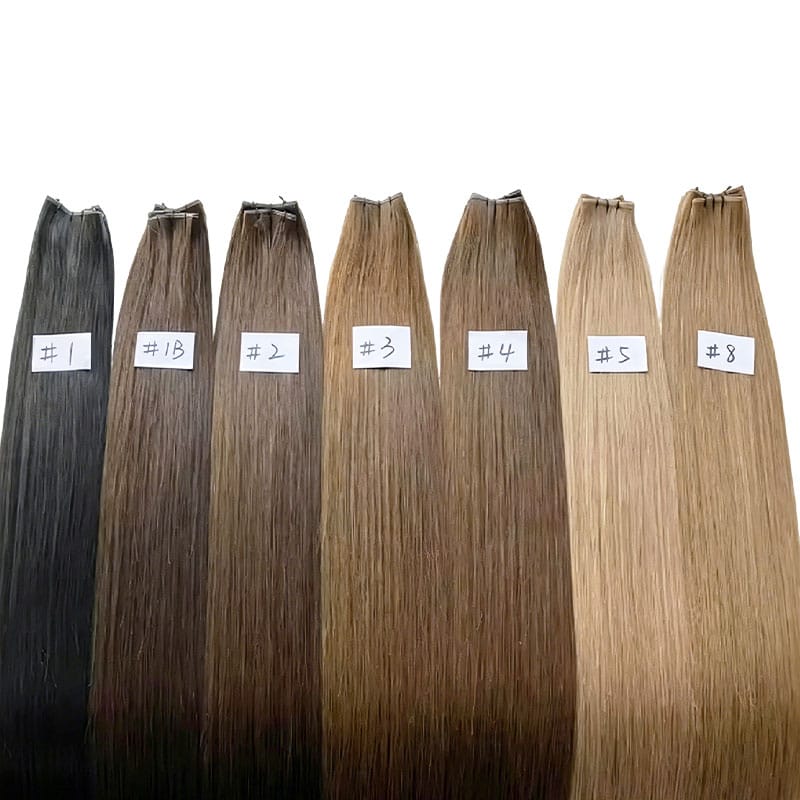
Tape-ins may be suitable for people who want a semi-permanent increase in length or fullness and have enough healthy natural hair to support appropriately selected extension sections.
They can be especially useful when a relatively flat attachment profile is important and the wearer prefers not to reinstall extensions each time additional volume is desired.
However, every area of the head does not need to receive the same number or density of extensions.
Some sections may offer good support and reliable coverage, while others may be too fragile or too exposed for the same attachment strategy.
Good extension planning responds to these differences.
The natural hair should determine the installation plan rather than the installation plan forcing every area of the natural hair to behave in the same way.
Conclusion
Tape in hair extensions for thin hair can create a natural-looking increase in length and fullness when the installation is designed around the natural hair rather than maximum extension volume.
The flat attachment structure can be beneficial where bulky systems would be difficult to conceal, but attachment design alone does not determine the quality of the result.
Extension weight, natural density, section strength, placement, texture, color matching, length, maintenance, and removal all contribute to the overall performance of the installation.
The most useful principle is proportionality.
Each extension section should add enough hair to improve the finished style without overwhelming the natural section supporting it. Attachments should remain concealed during everyday movement, and the added density should appear to continue naturally from the wearer’s own hair.
When these factors are considered together, tape-in extensions can enhance thin hair without making the finished hairstyle look unnecessarily heavy or artificial.
FAQ
Are tape in hair extensions good for thin hair?
Tape-ins can work well for thin hair because their flat attachment structure allows relatively discreet placement and distributed volume. However, suitability depends on natural hair strength, density, extension weight, and placement. A balanced installation is usually more important than simply choosing the tape-in method.
Do tape in extensions make thin hair look fuller?
Yes. Carefully placed tape-in extensions can add visible fullness through the lengths and ends. The most natural result comes from gradually increasing density so the extension hair looks like a continuation of the natural hair rather than creating a sudden difference in volume.
Can tape in extensions damage fine hair?
Any extension system can create stress when attachments are too heavy, poorly positioned, maintained incorrectly, or removed aggressively. Fine hair requires thoughtful sectioning and weight distribution. Persistent pulling, discomfort, or visible breakage should be treated as a reason to reassess the installation.
Are tape in extensions visible in thin hair?
They can remain discreet when enough natural hair is left above and around each attachment. Thin hair provides less coverage, so tapes positioned too close to exposed partings, the hairline, or sparse crown areas may become visible. Flat construction and careful placement improve concealment.
How should tape in extensions be cared for on thin hair?
Use gentle washing, controlled brushing, thoughtful product placement, and moderate heat styling. Detangle from the ends upward and avoid unnecessary pulling around the roots. Good maintenance should protect both the extension hair and the natural strands supporting each attachment.
Need Help Choosing the Right Tape In Hair Extensions?
If you’re unsure which tape in hair extensions are best suited to your natural hair density, desired length, texture, or styling routine, our team can help you evaluate a more suitable extension solution. Contact Yichuan Hair for personalized guidance on choosing hair extensions designed for natural blending, comfortable wear, and reliable performance.