Table of Contents
Introduction

Human hair weft hair extensions can add length, volume, texture, and styling flexibility without requiring every strand to be attached individually. Their continuous construction allows a stylist to distribute hair across a row, making them adaptable to full transformations, targeted volume, layered styling, and customized salon applications.
However, the term “human hair weft” describes a product format rather than a complete quality standard. Two wefts may look similar in a photograph while behaving very differently after washing, installation, heat styling, and repeated maintenance.
A reliable evaluation should consider four connected factors:
- The condition of the human hair fibers
- The direction and integrity of the cuticles
- The construction of the weft base
- The suitability of the product for the intended installation
This distinction matters because soft hair cannot compensate for a weak weft, and a well-constructed weft cannot correct poorly aligned or heavily processed hair. The most dependable weft hair extensions combine consistent fibers, stable construction, accurate color, appropriate density, and correct professional application.
What Are Human Hair Weft Hair Extensions?
Hair extensions are additions used to increase the visible length, fullness, or styling possibilities of natural hair. The broader concept is also described in the Wikipedia overview of hair extensions, which includes multiple attachment and integration methods.
Weft hair extensions consist of loose hair strands secured together along a narrow upper seam. This seam is known as the weft base or weft track. The hair below the seam remains free-flowing, allowing it to blend with natural hair after installation.
Understanding the Weft Structure
A weft has two functional zones.
The upper zone is the attachment area. It must hold the strands firmly while remaining narrow enough to lie close to the scalp. The lower zone provides the visible length, movement, density, and texture.
The balance between these zones affects the final result. A thick base may provide strength but create unnecessary bulk. An extremely thin base may look discreet but require more careful handling. The correct design depends on the hair density, installation technique, row placement, and desired coverage.
How Wefts Add Length and Volume
Because the strands are distributed across a continuous seam, a stylist can create even coverage with fewer individual attachment points. Rows can be placed in selected areas to build volume where it is needed rather than adding the same density everywhere.
This makes wefts useful for more than simply making hair longer. They can also:
- Add fullness through the sides and back
- Support layered cuts
- Increase density in naturally sparse areas
- Create stronger shape in curls and waves
- Introduce dimension through carefully matched colors
- Support temporary or reusable style changes
Human Hair Wefts vs Other Extension Formats
Individual extensions divide hair into small bonds, tips, rings, or adhesive sections. Wefts organize the hair into a wider track.
Neither format is automatically better. Individual methods can support detailed strand placement, while wefts can provide efficient coverage and controlled row construction. The best choice depends on the client’s natural hair, styling routine, scalp sensitivity, maintenance habits, and desired result.
How Human Hair Weft Extensions Are Made
Manufacturing quality begins long before the weft is sewn. The final performance reflects how the hair was sorted, aligned, processed, drawn, stitched, washed, dried, inspected, and packed.
Raw Hair Selection
The first step is evaluating the raw hair for length, strength, texture, color potential, and visible damage. Mixing incompatible hair in the same batch can lead to uneven absorption, inconsistent texture, or different responses to washing and styling.
Professional sorting should remove excessively short, brittle, or irregular strands before construction. This improves density consistency and reduces the number of loose fibers that may appear during early brushing.
Sorting and Directional Alignment
Human hair has overlapping cuticle layers on the strand surface. When strands remain aligned in the same root-to-tip direction, they are less likely to rub against each other in opposing directions.
Cuticle direction is especially important in longer weft hair extensions because the strands have more surface area to interact. Misalignment may not be obvious when the hair is coated, freshly conditioned, or kept straight. It often becomes more noticeable after repeated washing and movement.
Drawing and Thickness Control
Drawing refers to the distribution of strand lengths within a bundle or weft.
Single-drawn hair contains a wider mixture of shorter and longer strands. This can produce a naturally tapered finish, but the ends may appear lighter.
Double-drawn hair is sorted to create more consistent length from the upper section toward the ends. The result is a fuller appearance through the lower portion. Double-drawn does not mean that every strand is identical in length; it means the proportion of shorter strands has been more carefully controlled.
The right choice depends on the intended style. Natural layering may benefit from some variation, while blunt cuts and dense finishes usually require stronger end fullness.
Weft Construction and Reinforcement
The weft base must secure thousands of strands in a narrow structure. Its performance depends on stitch consistency, adhesive control where applicable, seam width, edge finishing, and the distribution of hair across the track.
An uneven track may create thin spots, bulky sections, or unstable edges. Excess reinforcement can make the base stiff. Insufficient reinforcement can increase fraying or strand loss.
A good weft should remain flexible enough to follow the shape of the head without folding sharply or creating pressure points.
Washing, Finishing, and Inspection
Finishing treatments can improve softness, manageability, and presentation, but they should not be used to hide structural problems. Hair that feels unusually slippery at first may behave differently after several washes if its initial feel depends heavily on surface coating.
Inspection should therefore evaluate more than immediate softness. A useful quality-control process may include:
- Dry and wet combing
- Gentle tension testing
- Weft-edge inspection
- Color comparison under consistent lighting
- Texture recovery after washing
- Strand-loss observation
- Measurement of length and track consistency
The purpose is not to make every strand identical. Human hair naturally has variation. The goal is to keep that variation within controlled and repeatable limits.
Main Types of Weft Hair Extensions
Different weft designs solve different installation and styling needs. Understanding the construction is more useful than choosing a product based only on its name.
Machine Weft Hair Extensions
Machine wefts are created with reinforced stitching across the top. They are generally durable and can hold a substantial amount of hair.
Their stronger base makes them suitable for applications that require stable coverage. However, the seam may be thicker than other weft types, so placement and natural hair density must be considered carefully.
Machine wefts may be cut when their construction permits it, but cut edges should be secured properly to reduce fraying and shedding.
Hand-Tied Weft Hair Extensions
Hand-tied wefts are traditionally created by tying hair onto a fine track. They are known for a lightweight, flexible base that can lie close to the scalp.
Because the track is delicate, it should not be cut without confirming that the specific product is designed for cutting. An unsupported cut can cause unraveling.
Hand-tied wefts work best when the stylist plans the row length in advance and stacks the required pieces without creating unnecessary bulk.
Genius Weft Hair Extensions
Genius wefts are designed to combine a thin profile with greater cutting flexibility. Their flat construction can help reduce bulk while allowing the stylist to customize track width for different head shapes.
Well-made genius weft hair extensions can be useful when a discreet base, consistent end density, and flexible sectioning are required. Even so, cutting technique and edge inspection remain important because construction can vary between product lines.
Flat and Invisible Wefts
Flat and invisible wefts focus on minimizing the visible ridge at the attachment area. They may use a compressed, bonded, or specially stitched upper section.
These designs can produce a smooth appearance, but “invisible” should not be interpreted as suitable for every client. If the row is placed too close to a visible parting, overloaded with hair, or installed without sufficient natural coverage, the track may still be detectable.
Single-Drawn and Double-Drawn Wefts
Single-drawn and double-drawn describe the length distribution, not the attachment method.
A machine, hand-tied, genius, or flat weft may be made with either drawing standard. This is an important distinction because buyers often compare a construction term with a density term as though they were competing product types.
Construction determines how the track behaves. Drawing determines how the hair density is distributed through the length.
The Four Layers of Weft Hair Extension Quality
A practical way to evaluate weft hair extensions is to use a four-layer model. This prevents a single attractive feature from dominating the decision.
Hair Fiber Condition
The fiber should be assessed for strength, elasticity, dryness, split ends, and response to gentle tension. Hair that looks glossy under strong lighting may still have weakened internal structure.
The most useful inspection is comparative. Check the upper length, mid-length, and ends rather than judging only the surface near the weft.
Cuticle Direction
Aligned cuticles support smoother strand interaction. This does not make the hair maintenance-free, but it reduces one common cause of friction-related tangling.
Cuticle claims should be supported by repeatable performance after washing, not just by product labeling.
Weft Base Construction
The base should be consistent in width, flexible, cleanly finished, and securely attached. Examine the start and end of the track because weak edges often reveal construction problems before the center does.
A track that twists when laid flat may create tension during installation. A track with irregular thickness may also produce uneven row stacking.
Color and Texture Consistency
Color matching should be checked in more than one lighting condition. Texture should be observed both before and after washing, especially when selecting waves or curls.
A reliable texture should return to a recognizable pattern after cleansing and gentle drying. Minor variation is natural, but dramatic changes across the same batch can make installation and blending difficult.
How to Choose the Right Weft Hair Extensions
The right product is not simply the fullest, longest, or thinnest option. It is the one that works with the natural hair rather than forcing the natural hair to support an unsuitable design.
Match the Natural Hair Density
Fine hair usually needs a lighter track and carefully controlled row weight. Thick hair can often conceal a stronger base, but it may require more strategic distribution to prevent a visible difference between the natural ends and the extensions.
Adding excessive hair does not always create a better result. It can produce a heavy perimeter, unnatural movement, or unnecessary tension.
Select the Correct Length
Length changes both appearance and mechanical load. As hair becomes longer, it creates more movement, brushing contact, and leverage on the attachment area.
The selected length should be supported by the natural hair density and installation method. A gradual transition often blends more naturally than a dramatic increase that leaves the natural layers disconnected from the extension length.
Choose a Compatible Texture
Texture matching is not limited to choosing straight, wavy, or curly hair. You should also consider strand diameter, pattern size, pattern direction, surface smoothness, and how the texture changes after washing.
A close texture match reduces daily styling effort. When the natural hair and extensions react very differently to humidity, washing, or heat, maintaining a unified appearance becomes more difficult.
Evaluate the Weft Thickness
A thin weft is useful only when it remains stable and holds the intended amount of hair. A thicker weft is useful only when the natural hair can conceal it comfortably.
Instead of asking which thickness is universally best, ask:
- Will the base lie flat in the planned row?
- Can the natural hair cover it during movement?
- Is the track flexible enough to follow the head shape?
- Can the stylist stack it without creating a ridge?
- Does the base remain stable after cutting, folding, or sewing?
Consider the Installation Method
Not every weft is suitable for every technique. Some products are designed to be cut, while others must remain intact. Some bases tolerate stacking better than others.
The installation method should be decided before the final product selection. Choosing the hair first and forcing it into an incompatible technique increases the risk of visible tracks, shedding, uneven tension, and difficult maintenance.
Weft Hair Extensions Comparison Table
| Weft type | Base profile | Cutting flexibility | Main strength | Installation consideration | Suitable application |
|---|---|---|---|---|---|
| Machine weft | Medium to thick | Often possible with sealed edges | Strong and stable track | Requires enough natural coverage | Fullness and structured rows |
| Hand-tied weft | Thin and flexible | Usually limited | Lightweight and close-fitting | Row width must be planned carefully | Discreet layered installation |
| Genius weft | Very thin and flat | Commonly flexible | Low bulk with customizable width | Cut edges still require inspection | Fine sectioning and natural blending |
| Flat weft | Flat compressed base | Depends on construction | Smooth contact with the head | Must not be overloaded | Hidden rows and controlled volume |
| Invisible weft | Designed for a discreet seam | Product-dependent | Reduced visible ridge | Placement remains critical | Areas requiring a subtle attachment |
Product names are not universal engineering standards. Two manufacturers may use the same label for different base structures. Always inspect the physical sample and confirm how it should be installed.
How Weft Hair Extensions Are Installed
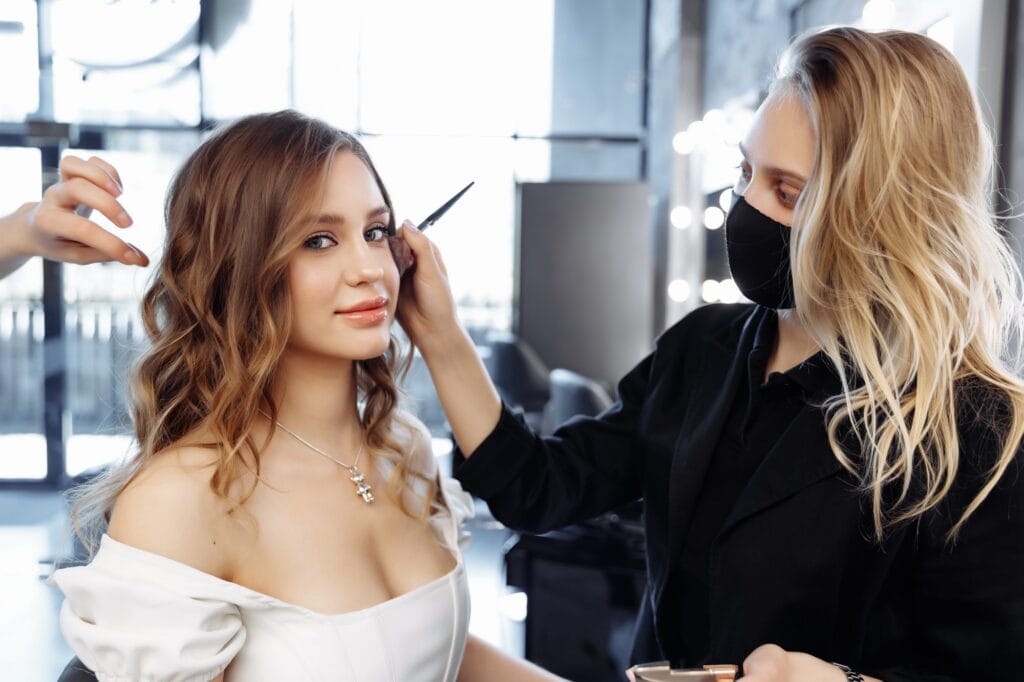
Professional installation is not only about attaching the hair securely. It is about distributing weight safely, preserving natural movement, and creating a row that remains manageable as the natural hair grows.
Sew-In Installation
A sew-in method attaches the weft to a prepared foundation using thread. The foundation may involve braiding or another structured base.
The stitching should secure the weft without pulling the natural hair unevenly. Tightness is not the same as stability. Excessively tight installation may create discomfort and restrict natural movement.
Beaded Row Installation
A beaded row uses small attachment points to create a foundation for the weft. The weft is then sewn or secured onto the row.
Bead spacing, section size, row shape, and tension must be adapted to the natural hair. Small sections carrying too much weight can create concentrated stress, while large uneven sections may allow slipping.
Braided Foundation Installation
A braided foundation can provide strong support when the braid is consistent and positioned correctly. However, the braid should not be excessively tight or bulky.
The stylist must also consider access to the scalp, drying time, and maintenance. A foundation that remains damp for too long can make the installation uncomfortable and difficult to care for.
Hidden and Layered Placement
Rows are usually placed below natural layers that can conceal the attachment. The perimeter, crown, temples, and parting areas require special attention because they move frequently or may expose the track.
Good placement follows the client’s natural styling habits. A row that is hidden when the hair is down may become visible when the hair is tied up.
Why Professional Sectioning Matters
Sectioning controls weight distribution. Clean, balanced sections help the installation move naturally and reduce isolated pressure points.
The row should follow the head shape without extending into fragile perimeter areas. It should also leave enough space for brushing, cleansing, and normal scalp movement.
How to Create a Natural Blend
A natural blend is created through color, texture, density, placement, and cutting. Color matching alone cannot correct a poor density transition.
Match More Than the Main Hair Color
Natural hair often contains several tones. The root area, mid-length, ends, and surface layers may reflect light differently.
A dimensional match may use closely related shades rather than one flat color. The objective is to reproduce the natural visual pattern, not simply match one selected strand.
Reproduce Natural Density Distribution
Natural hair is rarely equally dense from root to end. A believable result maintains enough fullness through the lower length without creating an abrupt shelf where the natural hair stops.
The stylist should evaluate the side profile and back profile, not only the front-facing result.
Use Strategic Row Placement
Rows placed too low may show during movement. Rows placed too high may be visible near the crown or parting. Rows placed too close together may create bulk.
Strategic placement uses the natural hair as coverage while preserving flexibility for common hairstyles.
Blend the Perimeter Carefully
The front hairline, sides, and lower perimeter often reveal an extension installation first. These areas usually need lighter density and more deliberate cutting.
The goal is not to hide every natural layer. It is to connect those layers gradually to the extension length.
Finish With Controlled Cutting and Styling
Cutting should shape the combined head of hair rather than treating the extensions as a separate section. Point cutting, slide cutting, or carefully planned layering may help soften the transition.
Any cutting method should respect the curl pattern and final styling routine. A blend that works only after intensive heat styling is difficult to maintain.
How to Care for Weft Hair Extensions
Good care protects both the hair fibers and the attachment area. The routine should keep the hair clean and conditioned without leaving the weft base damp, coated, or tangled.
Washing
Detangle the hair before washing. Apply water in a downward direction and cleanse the scalp and attachment area with controlled finger movements.
Avoid aggressive circular rubbing, which can twist the free hair around the weft. Rinse thoroughly because product residue can reduce movement and attract buildup.
Conditioning
Apply conditioner mainly through the mid-lengths and ends. Heavy products placed directly on the attachment area may contribute to buildup or slipping, depending on the installation method.
The ends usually need the most support because they are older, more exposed, and more likely to experience friction.
Drying the Weft Base
The weft base should be dried completely. This is one of the most overlooked parts of extension care.
Section the rows so air can reach the attachment area. Use controlled airflow and moderate heat rather than holding high heat close to one section. Leaving the base damp can contribute to odor, matting, and an uncomfortable scalp environment.
Brushing and Detangling
Support the hair near the attachment with one hand and begin detangling from the ends. Move upward gradually after lower tangles have been removed.
Use a brush suitable for extensions and avoid pulling directly against the weft. Brush between rows where the installation method allows, since hidden tangles often begin near the attachment area.
Heat Styling
Human hair weft extensions can generally be curled or straightened, but repeated high heat can weaken the fibers and dry the ends.
Use only the heat required to create the style, apply an appropriate protective product, and avoid direct contact between hot tools and the weft base.
Sleeping and Daily Protection
Before sleeping, make sure the hair is dry and gently detangled. A loose braid or controlled low style can reduce friction and prevent the lengths from moving freely across bedding.
During exercise, swimming, or high-movement activities, secure the hair in a way that limits tangling without creating excessive tension on the rows.
Common Problems and Their Root Causes
Extension problems are often described as product defects when they may result from several interacting causes. A useful diagnosis looks at material, construction, installation, care, and environment.
Shedding
Minor loose strands can appear after installation, especially when a weft has been cut. Persistent shedding may be linked to unsecured edges, damaged stitching, rough brushing, or weakened reinforcement.
The first inspection point should be the weft edge. If strand loss is concentrated near a cut section, the edge may need to be resealed or reinforced.
Tangling and Matting
Tangling may result from cuticle misalignment, dryness, product buildup, friction, incompatible textures, or poor detangling habits.
Matting near the base often develops when shed natural hair remains trapped between maintenance appointments. Regular separation and professional maintenance help prevent these loose strands from forming compact tangles.
Dryness
Extension hair does not receive natural scalp oils in the same way as growing hair. It therefore depends more heavily on external conditioning and gentle handling.
Dryness can also indicate accumulated heat exposure, harsh cleansing, or previous processing. Applying heavier products without removing buildup may make the hair feel coated rather than genuinely conditioned.
Visible or Bulky Rows
A row may become visible because the weft is too thick, positioned incorrectly, stacked excessively, or covered by too little natural hair.
Correcting the issue may require repositioning or reducing the row rather than simply adding more natural hair over it.
Slipping
Slipping can be caused by incorrect bead size, unsuitable sectioning, product buildup near the attachment, insufficient anchoring, or natural hair that is too fine for the selected method.
Repeated slipping should be investigated rather than corrected by increasing tightness. More tension can create a new problem without addressing the original cause.
Scalp Discomfort
Temporary awareness of a new installation can occur, but persistent pain, burning, pulling, or visible irritation should not be ignored.
A qualified professional should assess row tension, weight distribution, attachment placement, and scalp condition. Comfort is an essential performance requirement, not an optional feature.
How Long Do Weft Hair Extensions Last?
There is no universal lifespan for weft hair extensions. Longevity depends on fiber condition, processing history, weft construction, installation, styling frequency, cleansing routine, heat exposure, and maintenance.
It is also important to separate product lifespan from installation cycle.
The product lifespan refers to how long the hair remains suitable for reuse. The installation cycle refers to how long the current row can remain in place before it needs repositioning as the natural hair grows.
Factors That Affect Reusability
A weft is more likely to remain reusable when:
- The strands remain smooth and manageable after washing
- The ends retain sufficient strength
- The weft base remains secure
- The track has not stretched or twisted
- Color and texture remain consistent
- The hair has not experienced excessive chemical or heat stress
Signs That a Weft Needs Maintenance
Maintenance may be required when the attachment has grown away from the scalp, the row begins to rotate, hidden tangles appear near the base, or the hair becomes harder to brush between sections.
Delaying maintenance can allow normal shed hair to accumulate around the attachment area.
Signs That a Weft Should Be Replaced
Replacement may be appropriate when the base is structurally damaged, shedding remains excessive after edge repair, the ends are severely weakened, or the texture no longer responds to careful conditioning.
A weft should be evaluated as a complete unit. Reusing compromised hair simply because the track still exists may reduce comfort, appearance, and manageability.
How Professionals Evaluate a Weft Supplier
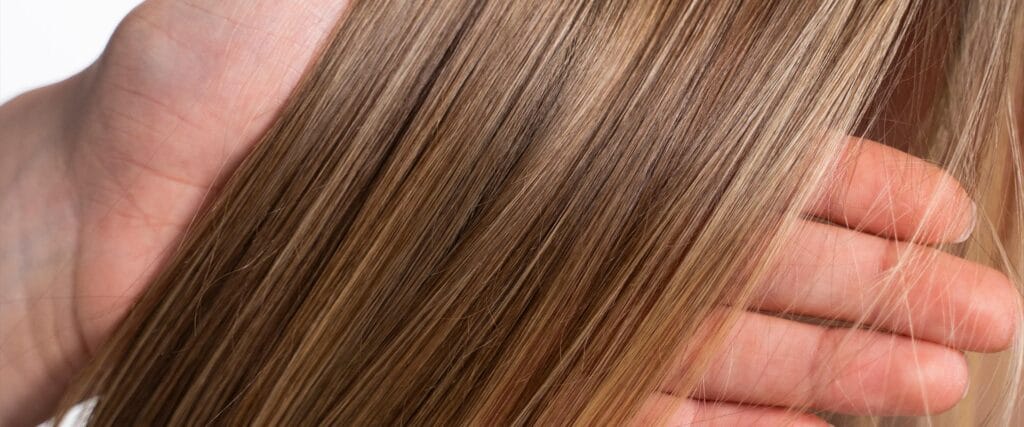
For salons, brands, and extension specialists, consistency matters as much as the quality of one sample. A supplier should be evaluated by how reliably the same specifications can be reproduced.
Sample Consistency
A sample should be washed, dried, brushed, and styled before approval. Visual inspection alone does not show how the hair behaves after routine use.
The sample review should document:
- Track width
- Total length
- End density
- Shade
- Texture
- Wet-combing behavior
- Dry-combing behavior
- Strand loss
- Response to heat styling
Batch Control
A reliable production process should control the variation between batches. This is especially important when a salon must maintain consistent results for returning clients or when a brand uses standardized color and texture names.
Batch comparison should use the same lighting, washing method, and evaluation criteria.
Color Reproducibility
Color names are not enough. A clear reference system may include physical samples, shade codes, photographs under controlled lighting, and tolerance guidance.
For mixed or dimensional colors, the proportion and distribution of tones should also be defined.
Weft Construction Quality
Inspect the center and edges of the track. Check whether the base lies flat, whether the stitch pattern remains even, and whether the strands are distributed consistently.
For cuttable wefts, confirm how the edge should be finished after customization.
Customization Capability
Professional users may require adjustments in color, length, texture, end density, weft width, packaging, or labeling. These details should be defined before production rather than assumed from general product names.
Businesses that need specification support can discuss customized weft hair extensions based on the intended installation, target texture, color system, density, and packaging requirements.
Documentation and Communication
Clear specifications reduce misunderstanding. A useful product record should identify the approved sample, construction type, shade, texture, length, drawing standard, packaging method, and inspection requirements.
Consistent communication is part of product quality because an accurate sample has limited value when its specifications are not recorded clearly.
Conclusion
Human hair weft hair extensions should be evaluated as an integrated system rather than a bundle of attractive strands. The hair fiber, cuticle direction, end density, weft construction, installation method, natural hair condition, and maintenance routine all influence the final result.
The most important insight is that quality is revealed over time. Initial softness and shine are useful observations, but they do not show how the hair will respond to washing, movement, heat, brushing, row maintenance, and reuse.
For a natural and dependable result, select weft hair extensions that match the client’s density and texture, confirm that the base suits the planned installation, inspect the hair after washing, and follow a care routine that protects both the strands and the attachment area.
FAQ
What are weft hair extensions?
Weft hair extensions are strands of hair secured along a narrow upper track. The track is attached in rows to add length, fullness, or texture. Different versions include machine, hand-tied, genius, flat, and invisible wefts, each with a different base structure and installation purpose.
Are human hair weft extensions suitable for fine hair?
They can be suitable for fine hair when the weft is lightweight, the row carries a controlled amount of hair, and the attachment avoids fragile areas. Product selection and sectioning are essential because an overly heavy or bulky row may be difficult to conceal and may place unnecessary tension on natural hair.
Can weft hair extensions be cut?
Some wefts, including many machine and genius designs, can be cut to match the required row width. Traditional hand-tied tracks generally should not be cut unless the manufacturer confirms otherwise. Any cuttable weft should be inspected and finished correctly to reduce edge fraying and strand loss.
Can human hair weft extensions be curled or straightened?
Human hair wefts can generally be curled or straightened with suitable tools and controlled heat. Use a heat-protective product, avoid repeated high-temperature styling, and keep hot tools away from the weft base. The hair’s processing history and condition will affect how well it tolerates styling.
How often should weft hair extensions be maintained?
Maintenance timing depends on natural hair growth, installation method, row position, and daily care. An appointment may be needed when the row grows away from the scalp, begins to rotate, becomes difficult to brush around, or develops trapped shed hair near the attachment area.