Table of Contents
Introduction
Clip in extensions offer a flexible way to add length, volume, or color without committing to a permanent attachment method. They can be installed for a hairstyle, removed at the end of the day, and prepared again for the next use. That convenience explains their appeal, but good results still depend on thoughtful product selection, accurate color matching, balanced placement, and careful maintenance.
The strongest results do not come from adding the largest possible set. They come from choosing clip in extensions that match the natural hair in density, texture, tone, and movement. This guide explains how the construction of the weft, the quality of the hair, and the installation pattern work together. It also offers practical methods that salons, brands, and regular wearers can use to improve comfort, blending, and product life.
Why Clip In Extensions Look Natural When the Structure Is Right
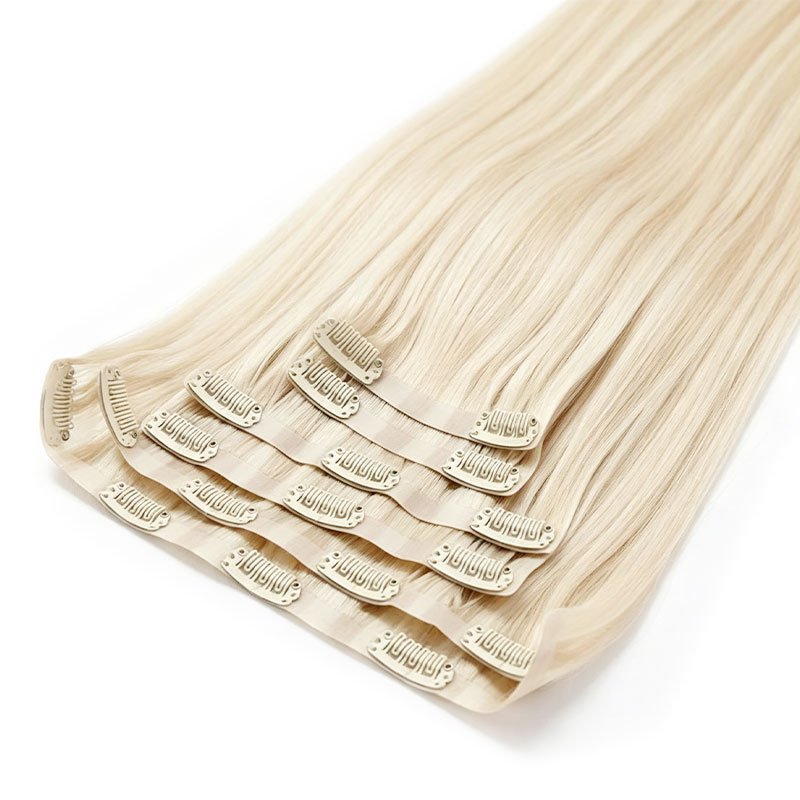
A natural finish starts at the base. Traditional fabric-backed wefts may feel thicker, while seamless PU constructions can sit flatter against the head. A flatter base is easier to conceal, especially around the sides and upper back of the head where natural hair may be less dense.
The clips on clip in extensions also matter. They should close securely without requiring excessive pressure or catching too much natural hair. When the clip spacing is balanced across the weft, the weight is distributed more evenly. This reduces localized pulling and helps the extension follow the shape of the head instead of standing away from it.
High-quality clip in extensions should also move like the wearer’s own hair. A stiff weft, bulky edge, or unevenly distributed density can remain visible even when the color is correct. Product construction therefore affects both comfort and appearance.
1. Match the Weight to the Natural Hair Density
More hair is not always better. Clip in extensions that are too heavy can create obvious separation between the natural hair and the extension lengths. They may also place unnecessary tension on small sections of natural hair.
Fine hair usually benefits from lighter, flatter clip in extensions placed below the widest part of the head. Medium-density hair can often support a broader set, while thick hair may need enough extension density to prevent the ends from looking thin compared with the natural upper layers.
A useful fitting principle for clip in extensions is to compare the fullness at the wearer’s ends with the fullness of the proposed extension set. The objective is continuity, not maximum volume.
When the natural ends are blunt and dense, clip in extensions should contain enough hair to continue that solid perimeter. When the natural hair is soft, layered, or tapered, a lighter set is generally easier to blend.
The total weight should also be distributed across several appropriate sections rather than concentrated in one heavy weft. Balanced distribution can improve comfort and reduce the likelihood that one small area carries most of the load.
2. Use Color Matching Beyond a Single Shade Number
Color matching for clip in extensions should be performed through the mid-lengths and ends rather than only at the roots. Many people have darker roots, lighter ends, dimensional highlights, or subtle warm and cool variations. Matching only the root shade can leave the extension lengths looking disconnected.
Natural light is usually the most useful environment for evaluating tone. Compare the hair in more than one area, then decide whether a single shade or a blended combination will create the most believable result.
Clip in extensions can combine two neighboring shades to recreate dimensional color without forcing every strand into one flat tone. Alternating compatible shades across separate wefts can create a softer transition than mixing all colors into one uniform piece.
Tone is as important as color depth. Two shades may appear equally dark but differ in warmth, ash balance, golden reflection, or red undertone. These differences can become more visible in daylight or after heat styling.
Product photographs can help narrow the options, but a physical color ring or approved sample remains more reliable for professional color matching. For customized clip in extensions, the approved sample should be retained as the reference for future production batches.
3. Choose the Correct Length for the Intended Result
Length affects blending, weight, and daily styling. Very long clip in extensions can create a dramatic result, but they require enough natural hair coverage to hide the transition between the wearer’s own ends and the extension lengths.
For volume-focused use, the selected length can remain close to the natural hair. This allows clip in extensions to fill the perimeter without creating a strong difference between the natural ends and the added hair.
For length-focused use, the natural hair may need soft layering, strategic placement, or gentle waves to connect shorter upper sections with the longer extensions. A large difference in length is more difficult to conceal beneath a short, blunt haircut.
Measuring clip in extensions from the expected placement point gives a more accurate preview than relying only on a standard length description. The same stated length may fall differently depending on the wearer’s height, neck length, curl pattern, and placement position.
Texture also changes the apparent length. Curly or wavy clip in extensions may appear shorter when worn in their natural pattern than when measured straight. Length planning should therefore reflect the final texture rather than the stretched measurement alone.
4. Place Each Weft Where the Head Can Support It
Placement determines whether clip in extensions feel secure and remain hidden. The widest wefts in clip in extensions generally sit across the back of the head, where there is more surface area and natural coverage. Narrower pieces can be used around the sides to connect the front and back sections.
Avoid installing a wide, heavy weft too high on the head. The upper layers may not provide enough coverage, and the clips may become visible when the wearer moves or changes the parting.
Placing the set too low can also create problems because the extension hair may separate from the natural perimeter. A low weft may become visible when the hair is lifted or tied back.
Create clean horizontal sections without pulling the natural hair tightly. Teasing is not always necessary. Secure clips, suitable placement, and appropriate set weight should provide most of the required stability.
When additional grip is needed, use the least aggressive method that keeps the weft stable. Excessive teasing can make removal and detangling harder, particularly when clip in extensions are worn frequently.
| Hair condition or styling goal | Recommended approach | Main reason |
|---|---|---|
| Fine or low-density hair | Use lightweight, seamless wefts placed lower on the head | Reduces bulk and improves concealment |
| Medium-density hair | Distribute medium-width wefts across the back and sides | Creates balanced volume without one heavy section |
| Thick natural hair | Use enough total density to match the natural perimeter | Prevents thin-looking extension ends |
| Short blunt haircut | Add layered placement and style with soft movement | Helps bridge the line between short hair and added length |
| Volume without extra length | Select a length close to the natural hair | Builds fullness while keeping the finish believable |
| Highlight or color effect | Blend two compatible shades in separate wefts | Creates dimension without a flat single-color result |
The table should be treated as a fitting framework rather than a fixed installation formula. The correct number and position of wefts still depend on the individual haircut, natural density, scalp comfort, and desired result.
5. Blend the Natural Hair and Extension Hair as One Shape
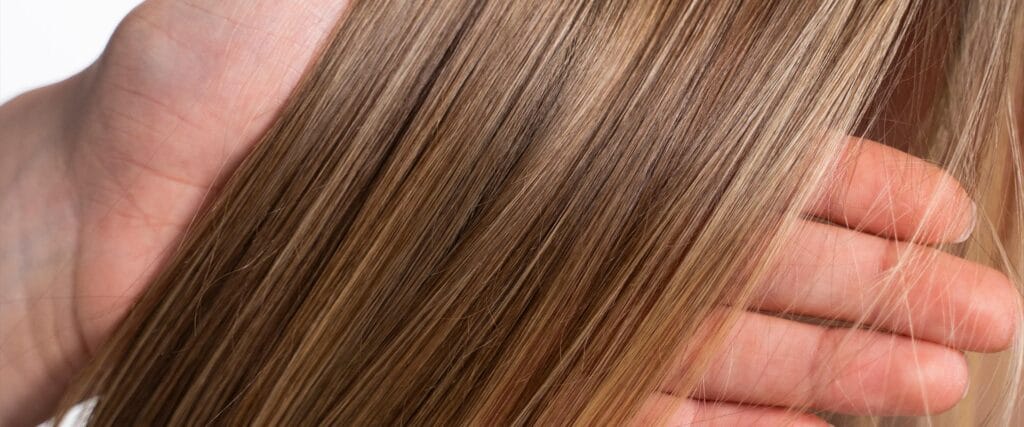
Even a well-matched set can look separate if the haircut and styling do not connect. The natural hair should fall over the attachment points, while the ends should merge into a continuous shape.
Soft waves are often effective because they combine the natural hair and clip in extensions into the same movement pattern. The eye follows the complete wave rather than focusing on the point where the natural hair ends.
Straight styles can also look polished, but the perimeter must be well balanced. A blunt natural haircut may need strategic placement or professional shaping to avoid a visible shelf above the extensions.
Clip in extensions should be brushed together with the natural hair after installation, but the root area needs support. Holding the weft near the base while brushing reduces movement at the clips.
Heat styling should be appropriate for the fiber. Human hair generally provides more styling flexibility than many synthetic fibers, but temperature control and heat protection still matter. The attachment base and clips should not be pressed directly with hot tools.
6. Remove Clip In Extensions Before Sleeping and Washing
Clip in extensions are designed for temporary wear. Removing them before sleep reduces friction, tangling, and unnecessary pulling on the natural hair. It also prevents the clips from pressing against the scalp during the night.
Remove each weft individually instead of pulling several pieces out together. Open every clip completely, support the natural hair near the attachment, and lift the weft away without dragging it through the section.
Wash clip in extensions separately when product buildup, odor, reduced movement, or difficulty styling indicates that cleaning is needed. Frequent washing is not always beneficial because every wash adds handling and can gradually reduce moisture.
Use a gentle downward motion, avoid scrubbing the weft base, and support the clips during rinsing. Conditioner is generally most useful through the mid-lengths and ends rather than directly on the base.
After washing clip in extensions, blot rather than twist the hair. Allow the set to dry completely before storage. Damp storage can contribute to tangling, odor, and distortion around the base.
A clean, dry set is also easier to inspect before the next installation. Check that each clip closes securely and that no loose hair has become trapped in the mechanism.
7. Store the Set in a Way That Preserves Its Shape
Storage is part of clip in extensions maintenance, not an afterthought. Clip in extensions should be detangled from the ends upward, with the weft supported in one hand.
Close the clips before storing the set so they do not catch on neighboring pieces. Check the teeth and fastening points for trapped strands before placing the wefts together.
Lay the wefts flat, hang them on a suitable extension hanger, or place them in a smooth storage bag. Keep the hair away from direct heat, moisture, and rough surfaces that create static or friction.
Very tight folding can leave bends in the base and make the wefts harder to position later. Avoid placing heavy objects on top of seamless clip in extensions because repeated pressure can change the shape of the PU base.
Organizing pieces by width also saves time. When each weft returns to the same general area of the head, installation becomes more consistent.
A simple arrangement system also makes it easier to identify unusual shedding, clip damage, or changes in texture before clip in extensions are installed again.
How Hair Quality Changes Clip In Extensions
With clip in extensions, the term human hair does not automatically guarantee identical performance from every set. Cuticle direction, processing history, strand strength, and color treatment influence how the hair behaves during brushing and repeated styling.
Remy hair is commonly valued because the strands are arranged in a consistent direction. This supports smoother movement and can reduce the opposing cuticle friction that contributes to tangling.
However, good raw material still requires careful manufacturing. Weak stitching, uneven weft density, unstable color, or poor clip attachment can reduce the usefulness of otherwise attractive hair.
The broader category of artificial hair integrations includes clip-in, tape-in, ring, fusion, sewn, and other attachment methods. Each method has different installation and maintenance requirements. Clip in extensions are distinguished by their removable clip-based construction, allowing the wearer to control when the hair is attached.
Quality should therefore be evaluated as a complete system. The hair, base, stitching, clips, color consistency, and density distribution all affect how clip in extensions perform.
Seamless PU Clip In Extensions and Traditional Wefts
For clip in extensions, a seamless PU base is designed to create a flatter visual profile than many conventional fabric-backed bands. This can be helpful when concealment is a priority or when the wearer has limited natural hair available to cover the weft.
The flexible PU area can also distribute the hair across a smooth base, reducing the raised seam that is sometimes visible under fine natural hair.
Traditional clip in extensions can still perform well, particularly when the natural hair is dense enough to hide the base. They may also suit users who prefer the feel and flexibility of a sewn fabric weft.
The better option depends on the wearer’s natural density, intended placement, desired volume, and preferred styling routine. “Seamless” should not be treated as a guarantee that every weft will be invisible in every position.
Yichuan Hair currently presents Seamless PU Clip-In Human Hair Extensions within its hair extension range. For salon or private-label projects, construction details should be confirmed alongside color, length, texture, total set weight, clip spacing, and packaging requirements.
Common Mistakes That Make Clip In Extensions Look Obvious
One common mistake with clip in extensions is placing too much hair on the sides. Side sections often have less natural density than the back, so heavy pieces can create visible gaps or uncomfortable pressure.
Another mistake is choosing extensions based only on the longest desired result. If the natural haircut cannot blend into that length, the added hair may look separate even when the shade is accurate.
Poor sectioning also causes trouble. Crooked or crowded sections allow wefts to overlap, while placement too close to the part line makes the clips easier to see.
A few well-positioned pieces often look more natural than a full set installed without a plan. Clip in extensions do not need to use every available weft during every installation.
Neglecting the natural hair underneath can also shorten comfortable wearing time. The wearer should remove the set gently, detangle the natural hair, and avoid repeatedly clipping into exactly the same small section when that area becomes tender.
Using a set that is too light can create a different problem. If the natural hair is thick and the extension ends are thin, the finish may look uneven. The solution is not always greater length; it may be a better density match.
How Often Should Clip In Extensions Be Cleaned?
There is no universal wash schedule for clip in extensions because wear frequency, styling products, environmental exposure, and hair texture vary.
Instead of washing by calendar alone, watch for reduced softness, visible residue, odor, tangling, or difficulty restyling the hair. These signs provide a better maintenance guide than a fixed number of wears.
Someone who uses clip in extensions occasionally and applies little product may clean them infrequently. A set worn regularly with hairspray, heat protectant, dry shampoo, or texture products will need attention sooner.
Between washes, gentle brushing and proper storage can restore order without unnecessary cleansing. Avoid applying additional oils simply to hide buildup, as this can make the hair feel heavy and transfer residue to the base.
When washing is required, focus conditioner on the mid-lengths and ends rather than saturating the clip mechanism. Rinse completely because remaining conditioner can make clip in extensions appear flat or difficult to style.
Quality Checks for Clip In Extensions
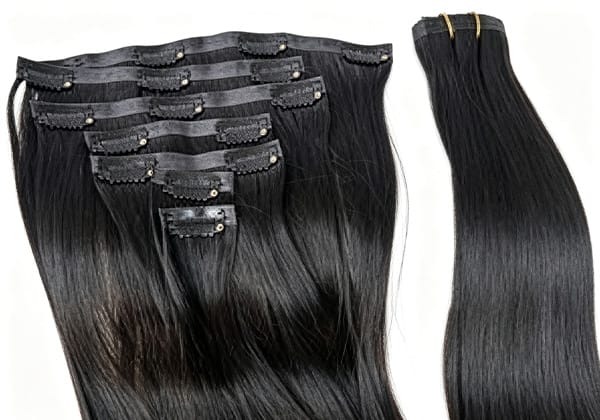
When sourcing clip in extensions for professional programs, evaluate more than the first impression. A set may appear smooth when new but behave differently after repeated brushing, washing, and heat styling.
Test how the clips open and close after repeated use, whether the base remains flat, and whether the set maintains consistent density from one production batch to another.
Color consistency in clip in extensions is especially important when replacement pieces or repeat orders will be combined with an existing set. Small shade differences may become noticeable when old and new wefts are worn together.
An approved physical sample and clear color reference can reduce variation. Product records should include shade, length, texture, total weight, base construction, clip type, and packaging details.
Also examine shedding after brushing and washing, the condition of the ends, heat-styling response, and how easily the extension returns to its intended texture.
These observations create a practical quality profile that is more useful than relying on a grade label alone. Two products carrying the same general grade description may still differ in processing, density, base construction, and finishing.
Businesses planning customized clip in extensions can discuss specifications, samples, colors, textures, set configurations, and packaging with the Yichuan Hair contact team. Detailed requirements help align the finished product with its intended salon service or branded collection.
Conclusion
Clip in extensions can create convincing length and volume when the product and the application are treated as one system. Hair quality in clip in extensions matters, but so do weft thickness, clip security, total weight, color tone, placement, and daily handling.
The best approach to clip in extensions is not to add as much hair as possible. It is to select a set that matches the natural density, distribute it where the head can support it, and blend both textures into one finished shape.
With careful removal, moderate washing, and organized storage, clip in extensions remain easier to style and more comfortable to wear.
Whether clip in extensions are intended for occasional transformations, salon services, or a professional product collection, consistent construction and realistic fitting decisions produce the most natural result.
FAQ
Can clip in extensions be worn every day?
Clip in extensions can be worn regularly when they remain secure and comfortable, but they should be removed before sleep. Rotate placement slightly when one area becomes tender, avoid excessive set weight, and allow the natural hair time without clips if tension develops.
How long do clip in extensions last?
The usable life of clip in extensions depends on hair quality, wear frequency, heat styling, washing, detangling, and storage. Replace the set when the base, clips, shedding, texture, or ends no longer meet an acceptable standard for comfortable and presentable wear.
Do clip in extensions damage natural hair?
Correctly weighted clip in extensions should not require strong pulling. The risk of breakage increases when a heavy set is clipped into weak sections, worn during sleep, removed roughly, or repeatedly attached to a tender area. Even weight distribution is essential.
Can clip in extensions be washed like natural hair?
Clip in extensions should be removed and washed separately. Use gentle downward motions, avoid scrubbing or twisting the base, rinse thoroughly, and allow the set to dry completely before storage. Washing only when necessary reduces unnecessary handling and dryness.
Are human hair clip in extensions better for styling?
Human hair clip in extensions generally provide flexible styling and natural movement. Performance still depends on processing quality and construction. Use controlled heat, protect the mid-lengths and ends, and avoid placing hot tools directly against the clips or base.