Table of Contents
Introduction
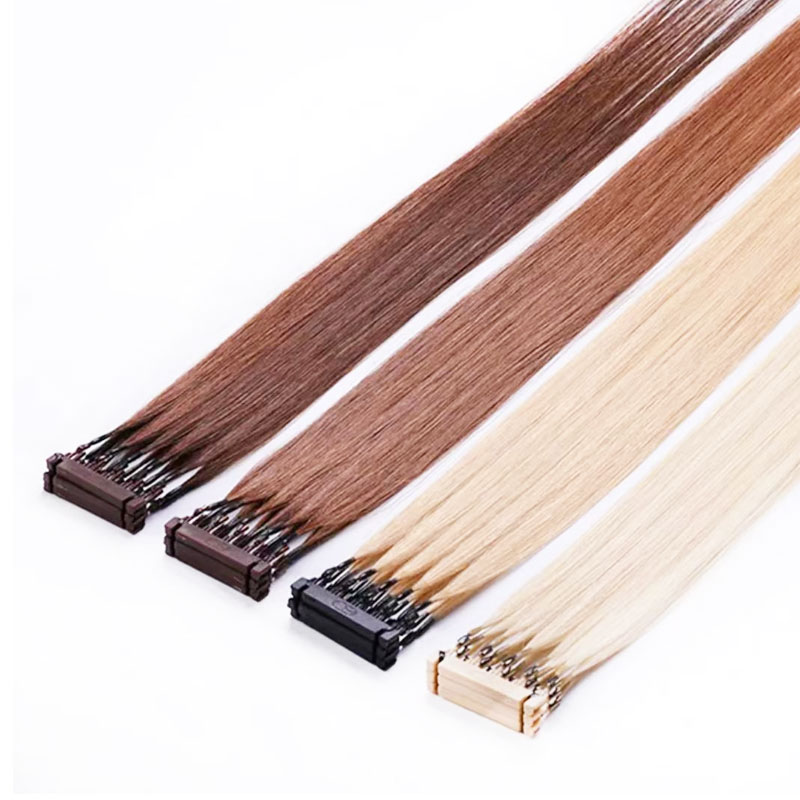
For most wearers, 6D hair extensions should be professionally checked and maintained approximately every four to six weeks. However, that range should be treated as a planning guideline rather than a fixed rule.
Some people need attention after three or four weeks because their natural hair grows quickly, their scalp is sensitive, or their daily routine places more movement on the attachment points. Others may reach five or six weeks with the extensions still secure, comfortable, and easy to manage.
A good maintenance schedule is based on three questions:
Is the attachment still positioned correctly?
Is the natural hair around it clean, separated, and free from excessive tangling?
Does the scalp feel comfortable without persistent pulling, pain, or irritation?
The answers matter more than the date alone. Well-planned maintenance protects the appearance of the extensions, supports more even weight distribution, and makes removal or reinstallation easier.
The Practical Maintenance Interval for 6D Hair Extensions
A four-to-six-week maintenance appointment is a practical starting point for many 6D hair extensions. By this stage, natural hair growth may have moved the attachment farther from the scalp, and the original sectioning may no longer distribute the extension weight as evenly as it did on installation day.
First-time wearers can benefit from an earlier comfort check, usually within seven to fourteen days. This does not always require a complete removal or reinstall. It allows the stylist to inspect tension, attachment security, scalp comfort, and the client’s home-care technique before minor issues become harder to correct.
Clients with fine, fragile, heavily processed, or low-density natural hair may require shorter maintenance intervals. The same applies to people who wash frequently, exercise intensively, wear tight hairstyles, or use styling products close to the attachment area.
By contrast, stable installation, careful brushing, moderate washing, and low root tension may allow a wearer to stay closer to the longer end of the range. Even then, maintenance should not be postponed simply because the extensions still look acceptable from the outside.
Why There Is No Universal Maintenance Schedule
The phrase “6D hair extensions” does not always describe one globally standardized attachment specification. Connection design, section size, installation tools, removal steps, and the number of strands applied at one time can differ between systems.
Before creating a salon protocol, professionals should confirm the construction and instructions for the specific 6D hair extensions being used. A schedule designed for one attachment structure may not be suitable for another.
Natural hair growth
As natural hair grows, the attachment gradually moves away from the scalp. This creates more space between the root and the extension connection. The added movement can make the extension easier to twist, catch during brushing, or become visible when the hair is styled.
Growth does not occur at exactly the same speed for every person or every area of the scalp. That is why one client may need maintenance sooner than another, even when both received the same product and installation method.
Attachment position and weight distribution
At installation, the stylist should divide the natural hair into sections that can safely support the selected extension weight. As the attachment moves downward, the same weight is carried farther from the root.
This change acts like a small lever. The farther the attachment moves from the scalp, the more movement may be transferred to the supporting natural hair during brushing, sleeping, and styling. Maintenance restores the attachment to an appropriate position and gives the stylist an opportunity to rebalance the sections.
Hair density and scalp sensitivity
Dense natural hair can often support a different extension distribution than fine or sparse hair. This does not mean thicker hair can be left without maintenance for longer periods. It means the service plan should reflect the strength, density, and condition of the natural hair.
Scalp sensitivity is equally important. One wearer may tolerate an attachment comfortably, while another may experience pulling from the same placement or weight. Comfort should be assessed throughout the wearing period, not only immediately after installation.
Lifestyle and washing frequency
Frequent washing, heavy perspiration, humid environments, regular heat styling, and repeated tying can affect how quickly the root area becomes difficult to manage.
The problem is not necessarily that water or activity automatically damages the extension. The concern is that repeated movement, product accumulation, incomplete drying, and rough handling may accelerate tangling or loosen individual attachment points.
Installation quality
Maintenance cannot correct every problem caused during the original application. Sections that are too small, uneven, overloaded, or positioned under excessive tension may become uncomfortable before the expected maintenance date.
A secure installation should not depend on excessive tightness. The goal is controlled attachment, even distribution, and sufficient movement for the natural hair and scalp.
What Changes Between Installation and Maintenance
The most important changes often occur at the root, where they are less visible than the extension lengths.
Natural shedding continues while extensions are being worn. Some shed hairs may remain held inside the attachment section until maintenance. This is expected to a degree, but the retained hairs can combine with new growth, styling products, and neighboring strands.
Without careful separation, these hairs may begin to form small tangles near the root. Over time, the tangles can connect across adjacent sections and become more difficult to remove without stressing the natural hair.
The attachment may also rotate. Instead of lying flat in the original direction, it can turn sideways, lift away from the scalp, or move when the hair is brushed. Rotation is often an early warning that the section needs professional attention.
Another change is visual blending. An extension that was hidden at installation may become easier to see as it grows downward. The overall hairstyle can also lose its original shape as the natural hair grows and the layers no longer fall in the same position.
Signs That 6D Hair Extensions Need Maintenance
You do not need to wait for several problems to appear at the same time. One clear warning sign may be enough to justify an earlier appointment.
The attachments have moved noticeably
A small amount of movement is expected as hair grows. Maintenance becomes more urgent when the connection hangs far enough from the root to swing, twist, or catch during normal brushing.
The extensions begin to rotate
An extension that repeatedly turns sideways may no longer be supported evenly. Rotation can increase friction between neighboring sections and make the connection more visible.
Root tangling becomes harder to separate
Minor separation should remain manageable with gentle daily care. If several attachment sections begin joining together, professional detangling should be arranged before a compact mat develops.
The scalp feels painful or irritated
Persistent pulling, stinging, soreness, redness, or tenderness should not be treated as a normal part of wearing extensions. The appointment should be moved forward rather than waiting for the original maintenance date.
The extensions no longer blend naturally
Visible attachment points, uneven volume, disconnected layers, or noticeable differences between the extension and natural hair can indicate that the placement needs adjustment.
Several attachments become loose
One loose extension may be an isolated issue. Repeated slipping across multiple sections can point to unsuitable sectioning, product buildup, installation inconsistency, or a mismatch between the system and the wearer’s hair.
Recommended Maintenance Timing by Hair and Lifestyle
The table below provides practical starting points. It is not a medical standard or a substitute for the instructions supplied with a specific 6D system.
| Hair or lifestyle situation | Suggested early check | Typical maintenance planning range | Main reason |
|---|---|---|---|
| First-time extension wearer | 7–14 days | 4–6 weeks | Confirms comfort, tension and home-care technique |
| Fine or fragile natural hair | 2–3 weeks | 3–5 weeks | Requires closer monitoring of section strength and weight |
| Frequent washing or high activity | 2–3 weeks | 3–5 weeks | More movement, moisture and root handling |
| Average hair density and routine | 3–4 weeks | 4–6 weeks | Allows inspection before growth causes excessive movement |
| Low-manipulation routine | Around 4 weeks | 5–7 weeks | May remain stable when attachment and scalp condition are good |
| Any wearer with pain or irritation | As soon as possible | Do not wait for the scheduled date | Discomfort may indicate excessive tension or another problem |
The most reliable approach is to schedule the next appointment when the extensions are installed, then adjust future intervals based on the condition observed during maintenance.
For example, a client booked at six weeks may arrive with substantial root movement and early tangling. Their next appointment should be moved to four or five weeks. Another client may return at four weeks with clean sections, minimal movement, and no discomfort. Their next check might reasonably be scheduled slightly later.
This record-based approach is more accurate than applying the same interval to every client.
What Happens During a Professional Maintenance Appointment
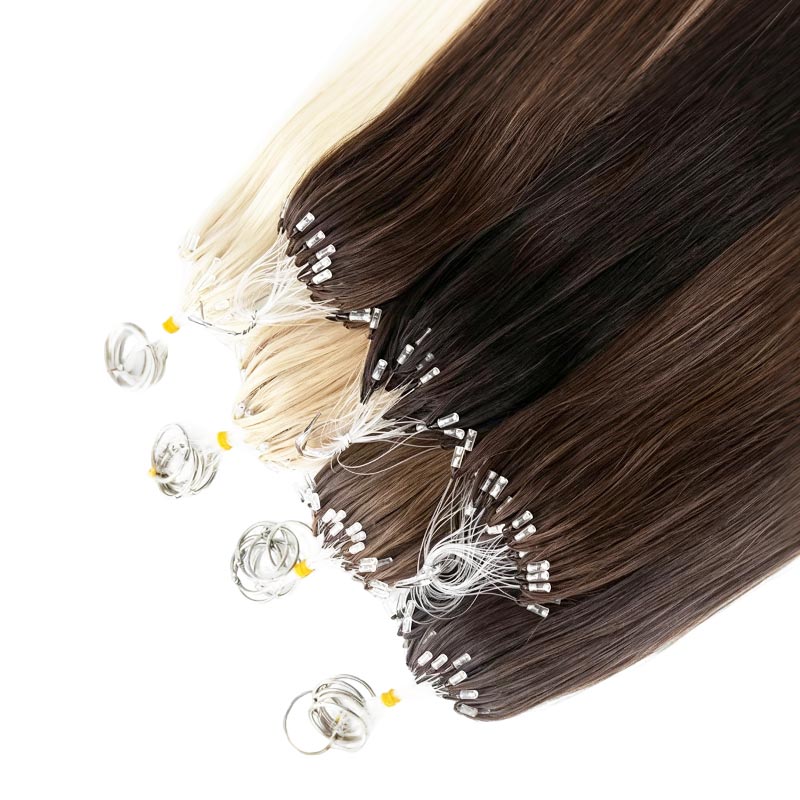
Maintenance should be more than brushing the visible hair and tightening loose attachments. A complete service evaluates both the extension product and the natural hair supporting it.
Scalp and attachment inspection
The stylist checks for irritation, redness, excessive tension, broken hairs, loose connections, product buildup, and uneven weight distribution. Each section should be assessed rather than judging the installation only by its overall appearance.
Section-by-section detangling
Retained shed hairs and early tangles are carefully separated before removal or adjustment. Pulling through a compact tangle can place unnecessary stress on the natural hair, so this stage should not be rushed.
Removal or adjustment
The correct removal process depends on the specific 6D system. Tools or techniques intended for another attachment method should not be substituted without confirming compatibility.
Extensions should be released without force. If a connection does not open as expected, the stylist should stop and reassess rather than pulling on the natural hair.
Natural hair and scalp cleaning
Once the attachment is removed, the natural hair can be cleaned, dried, detangled, and inspected more thoroughly. This step helps identify breakage, weak sections, or scalp conditions that were hidden beneath the installation.
Extension inspection
The extension hair should be evaluated for shedding, dryness, matting, color change, attachment damage, and overall suitability for reuse. Reusable hair should still meet the salon’s quality standard before being reinstalled.
Reinstallation and redistribution
The original sections should not automatically be reused without evaluation. New sectioning may be needed because natural density, growth, or scalp sensitivity can vary across the head.
Reinstallation is an opportunity to correct visible placement, reduce weight in vulnerable areas, refresh the shape, and create a more natural blend.
How Daily Care Affects the Maintenance Interval
Good home care does not eliminate professional maintenance, but it can help the installation remain orderly and comfortable between appointments.
Brush the extension lengths gently while supporting the hair near the attachment area. Begin at the ends and work upward in controlled sections. Pulling a brush from the roots to the ends in one movement can transfer unnecessary force to the connections.
During washing, avoid piling the hair on top of the head or rubbing the roots in circular motions. Clean the scalp carefully, allow water and cleanser to move in the natural direction of the hair, and rinse thoroughly.
Conditioning products can be applied to the mid-lengths and ends where moisture is most needed. Heavy oils, masks, or slippery products should not be concentrated directly on attachment points unless the product manufacturer specifically permits it.
The root area should be dried properly. Going to bed with damp attachment sections may increase friction and encourage neighboring strands to tangle. Long hair can be arranged loosely before sleep to reduce uncontrolled movement.
Heat tools should be used carefully. Even when the extension hair can be styled with heat, direct and repeated contact with an attachment structure may weaken or deform it.
Scalp Comfort and Tension Should Guide the Schedule
A maintenance calendar should never override clear scalp warning signs.
Traction alopecia is a form of hair loss associated with repeated or prolonged pulling forces on the hair. Tight or heavy extension styles may increase tension on the natural hair and scalp. Persistent discomfort, visible pulling, or unusual hair breakage should therefore be assessed promptly rather than left until the next scheduled maintenance appointment.
This does not mean every extension wearer will develop hair loss. It means tension must be treated as a technical and health consideration, not simply as a temporary inconvenience.
An installation that feels painfully tight should be assessed promptly. Waiting several days in the hope that severe tension will “settle” can prolong stress on the supporting hair.
Clients should also monitor the hairline, temples, and other naturally delicate areas. These sections may require lighter extension weight, different placement, or no attachment at all.
Persistent scalp symptoms, noticeable thinning, broken hairs, or areas of hair loss should be evaluated by an appropriate medical professional.
How Hair Quality Influences Maintenance
High-quality human hair can improve softness, blending, styling behavior, and the ability to reuse the extension. It does not make maintenance optional.
Hair with better cuticle alignment generally behaves more predictably during washing and brushing because the strands are arranged in a consistent direction. Poorly processed hair may become rough, dry, or tangled more quickly, increasing the amount of handling required at each appointment.
However, even excellent extension hair cannot prevent natural hair growth, root movement, retained shedding, or incorrect weight distribution. These are structural reasons for maintenance rather than signs of defective extension hair.
The attachment area should therefore be assessed separately from the extension lengths. Hair can still look smooth and attractive while the root sections have moved too far from the scalp.
For salons and brands, maintenance performance can also reveal product consistency. Repeated records of early slipping, attachment breakage, unusual shedding, or difficult removal should be reviewed by product batch, specification, and installation technique.
When Extensions Should Be Removed Instead of Adjusted
Not every installation is suitable for a simple move-up or partial correction.
Complete removal may be the safer option when root matting has connected multiple sections, several attachments are damaged, the natural hair shows visible breakage, or the scalp remains irritated.
Removal may also be necessary when the extension hair has deteriorated beyond the standard required for reinstallation. Reusing hair that tangles heavily, sheds excessively, or has a damaged attachment can create more work and reduce the quality of the finished result.
A professional should not reinstall extensions automatically just because the hair is technically removable. Reuse should depend on hair quality, attachment condition, hygiene, client comfort, and the strength of the natural hair.
After removal, some clients may benefit from a short break before reinstallation. This decision should be based on the condition of the scalp and natural hair rather than a fixed rule applied to everyone.
Building a Consistent Maintenance Plan for Salons
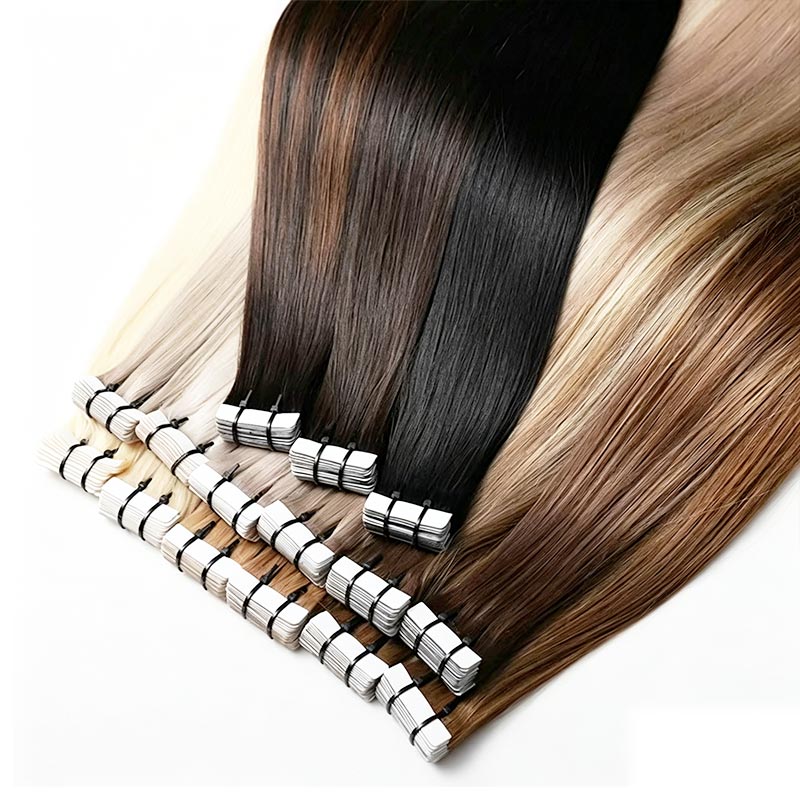
A salon maintenance system becomes more reliable when each appointment produces useful records.
The initial installation record can include the extension type, length, texture, shade combination, total weight, attachment placement, section size, and any areas where reduced tension was required.
At maintenance, the stylist can record:
- Time since installation
- Amount of attachment movement
- Number of loose sections
- Root tangling level
- Scalp condition
- Condition of the extension hair
- Changes made during reinstallation
- Recommended timing for the next appointment
Over several visits, these notes create a client-specific maintenance pattern. They also help distinguish between home-care issues, installation technique, product inconsistency, and natural changes in the client’s hair.
For product specifications, custom colors, textures, packaging requirements, or salon supply planning, businesses can discuss their application needs with the Yichuan Hair team. Clear information about the intended installation method helps align product construction with maintenance expectations.
Conclusion
Most 6D hair extensions benefit from professional maintenance approximately every four to six weeks. First-time wearers, fine-haired clients, frequent washers, and highly active individuals may need an earlier check or a three-to-five-week service interval.
The date is only one part of the decision. Attachment movement, root tangling, scalp comfort, natural hair condition, and overall weight distribution provide more useful evidence.
Good maintenance begins with correct installation, continues with gentle daily care, and ends with a professional assessment before the attachment becomes difficult to manage. When discomfort, excessive movement, or root matting appears, the appointment should be brought forward rather than delayed.
FAQ
Can 6D hair extensions stay in for eight weeks?
Some installations may remain visually secure for several weeks, but appearance alone is not enough. Root movement, retained shedding and scalp tension should be inspected professionally. Leaving extensions unattended for eight weeks may not suit fine hair, active lifestyles or fast growth.
Why do 6D hair extensions need regular maintenance?
Natural hair continues growing and shedding after installation. As the attachments move downward, weight distribution changes and loose hairs may collect near the roots. Maintenance restores placement, separates the sections and checks the condition of both the scalp and natural hair.
Can I wash my hair before a maintenance appointment?
Unless your stylist gives different instructions, clean and fully dry hair usually makes assessment easier. Avoid applying heavy oils, masks or slippery products near the attachment area before the appointment, as buildup can affect handling, removal and reinstallation.
Can 6D hair extensions be reused after removal?
Reuse depends on the extension hair, attachment condition, removal method and overall hygiene. Human hair that remains smooth, secure and structurally sound may be suitable for reinstallation, but damaged, heavily tangled or shedding extensions should be replaced.
What should I do if 6D hair extensions feel tight?
Persistent pain, stinging or strong pulling should be assessed promptly. Do not wait until the planned maintenance date or attempt to loosen the system by force. A trained professional should inspect the weight, section size, attachment placement and scalp condition.